NIST’s Technical Principle #6 makes an important point: 90% ember hardening does not produce 90% risk reduction. That finding points to one of the biggest opportunities in wildfire mitigation today: closing the final link in the combustion chain. I call this missing link "The Combustion Gap" because it represents the gap between reducing wildfire exposure and preventing the structure itself from becoming fuel.
After more than 22 years in the wildfire mitigation and structure-protection industry, I want to share several lessons the field data has made difficult to ignore. I’ve had the privilege of working with and speaking to thousands of home, business, and cabin owners, as well as leading fire scientists and professionals from the U.S. Forest Service, Incident Management Teams, BLM, and CAL FIRE, true heroes who deserve far more support for risking their lives to save others’ homes. Those of us in the industry are always looking for better strategies to save homes, and it appears we’ve found it, after 30 years of field testing. And it has a 98% success rate.
I want to begin by emphasizing that we must continue to promote defensible space and home hardening. These measures have proven effective in fast-moving wildfires and urban conflagrations, and they remain the only current mitigation strategies that can make a difference in the first 48 hours of fires like the Camp and Palisades fires. These firestorms leave little or no opportunity for tactical mitigation at the start, but major wildfires average 50 or more days from start to containment. Now there are proven strategies that can significantly reduce long-tail home destruction after rapid-start fires, along with steps homeowners can take to reduce ember exposure when they may have less than an hour.
For fifteen years, we’ve approached wildfire safety as a static checklist. Federal wildfire appropriations reached nearly $60 billion from FY2015 to FY2024, with most funding directed toward response and suppression. About $10 billion was allocated to mitigation efforts such as fuel reduction, prevention grants, and home hardening across the Western states, with California accounting for an estimated $4.7 billion.
The $10 billion figure, while substantial, is relatively modest when spread over 15 years and hundreds of millions of acres, especially when compared with the tens of billions spent on suppression and the hundreds of billions in total wildfire damage. Yet, as climate change makes wildfires more extreme, even major spending on defensible space and home hardening has not stopped the insurance industry from reaching a structure-loss cliff, where small remaining vulnerabilities can trigger catastrophic losses.
The data suggests that while these efforts are foundational, there is a fundamental gap in how we measure success. To move the needle on loss reduction, we have to examine the operational science of how homes actually ignite and address the final link in the combustion chain: the home itself.
Why the Last 10% Matters
NIST recently quantified something those of us in the field have long observed. Their Technical Note 2205 states that the relationship between hardening a home and reducing its risk is not linear. Their Technical Principle #6: 90% ember hardening does not translate to 90% risk reduction.
In a high-intensity fire, a home with 90% of the work done is far better positioned than one with none, but the remaining openings still matter. Even a $50,000 Class A roof cannot keep embers from finding a single unprotected piece of trim, roof valley, vent, or gap in a deck. In fact, between 2016 and 2025, according to CAL FIRE’s Damage Inspection (DINS) reports, an estimated 41,000 homes with Class A roofs were destroyed in California.
Breaking the Last Link
While we must continue to endorse traditional hardening and defensible space (Zones 0, 1, and 2), we have to realize that most structures built before 2008 are still ultimately combustible. CAL FIRE estimates that 60% to 90% of structure ignitions are caused by wind-blown embers, which can travel up to 2 miles ahead of the actual fire front.
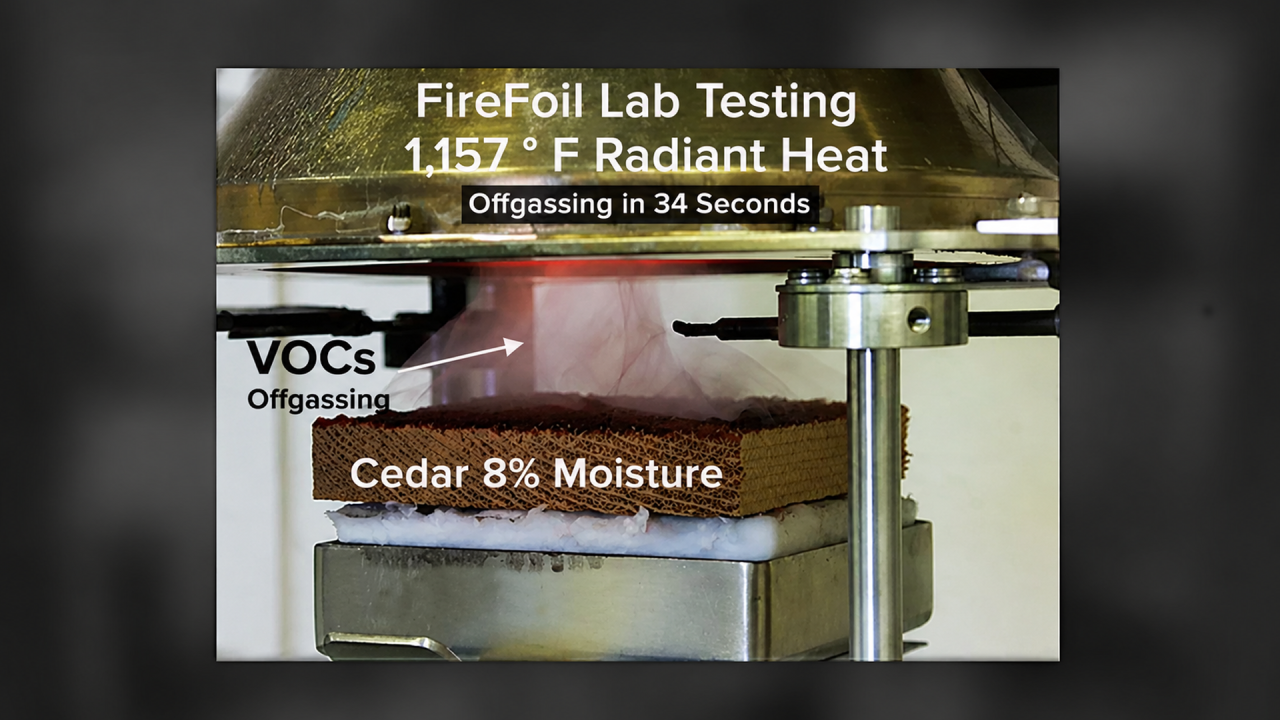
As these embers lodge in 90° corners and crevices, combined with radiant heat from the fire, they create localized heat. When wood preheats in the approaching fire and reaches 575°F to 800°F, it begins to off-gas flammable volatile organic compounds (VOCs). At that point, a passing ember doesn't just land on wood; it ignites a gas plume, starting a fire that moves inside the structure. This is why NIST’s Principle #7 recommendations call for 100% ember-protection compliance to significantly reduce ember ignition potential under high-exposure conditions.
Operational Lessons from the U.S. Forest Service
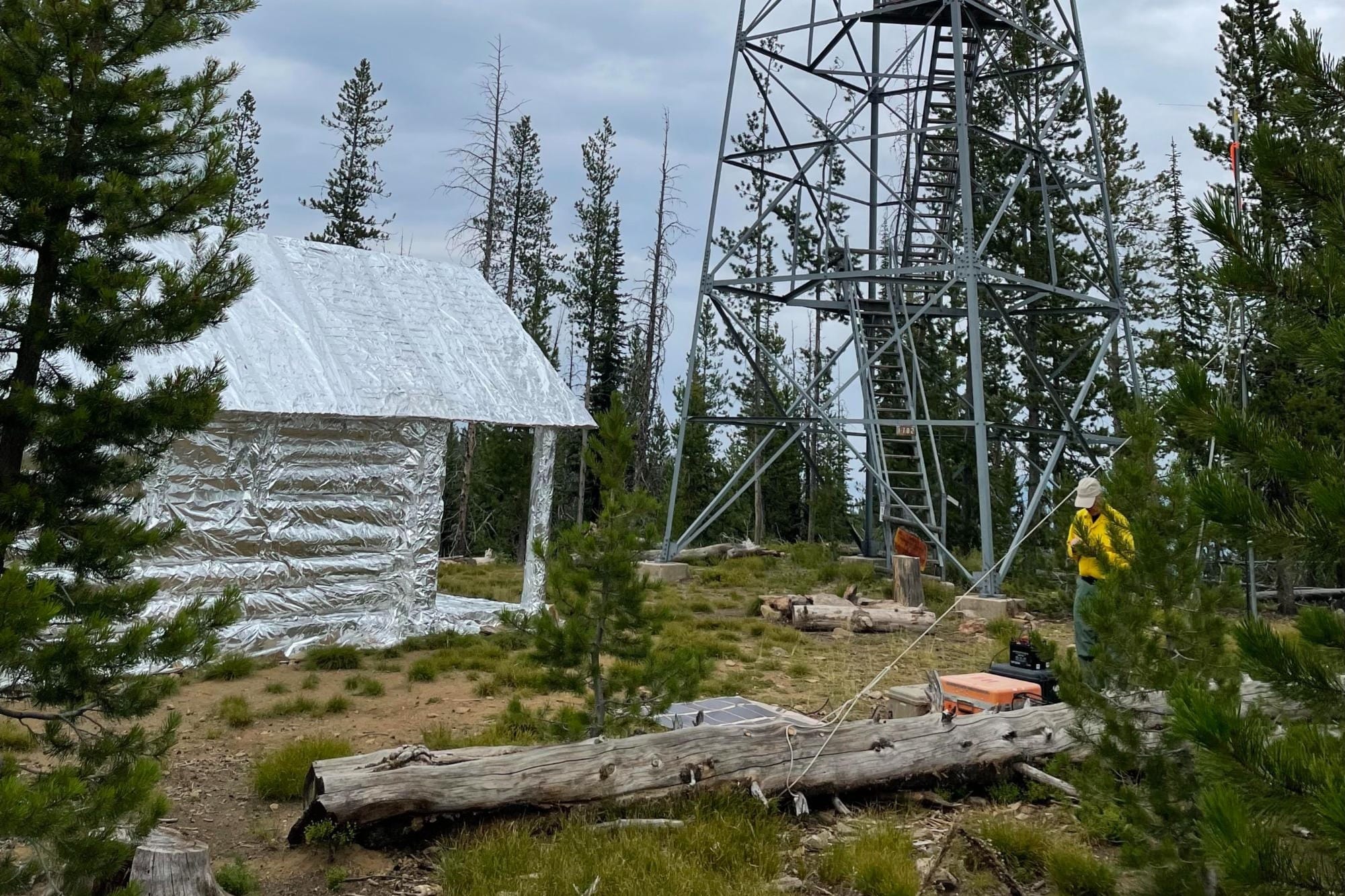
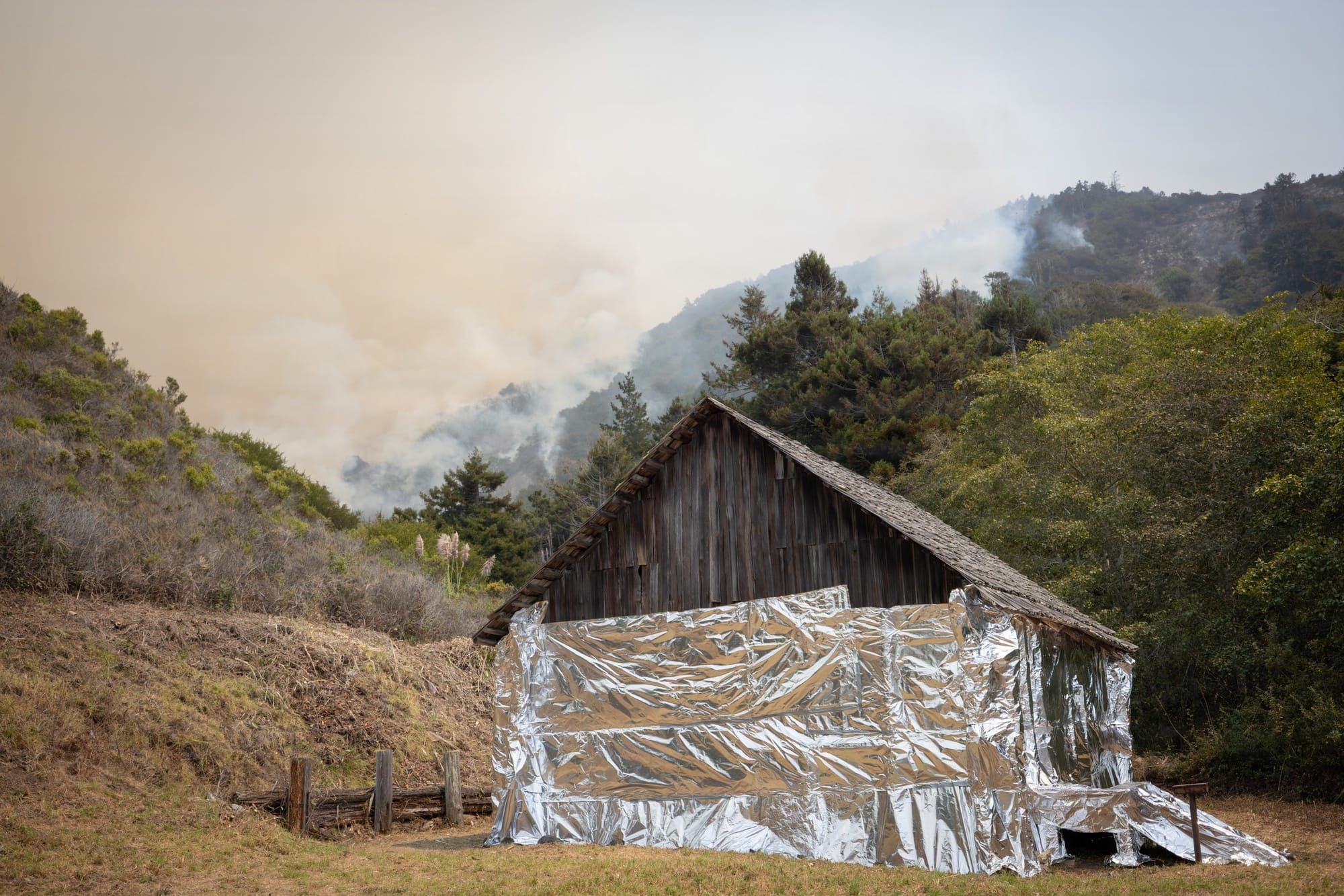
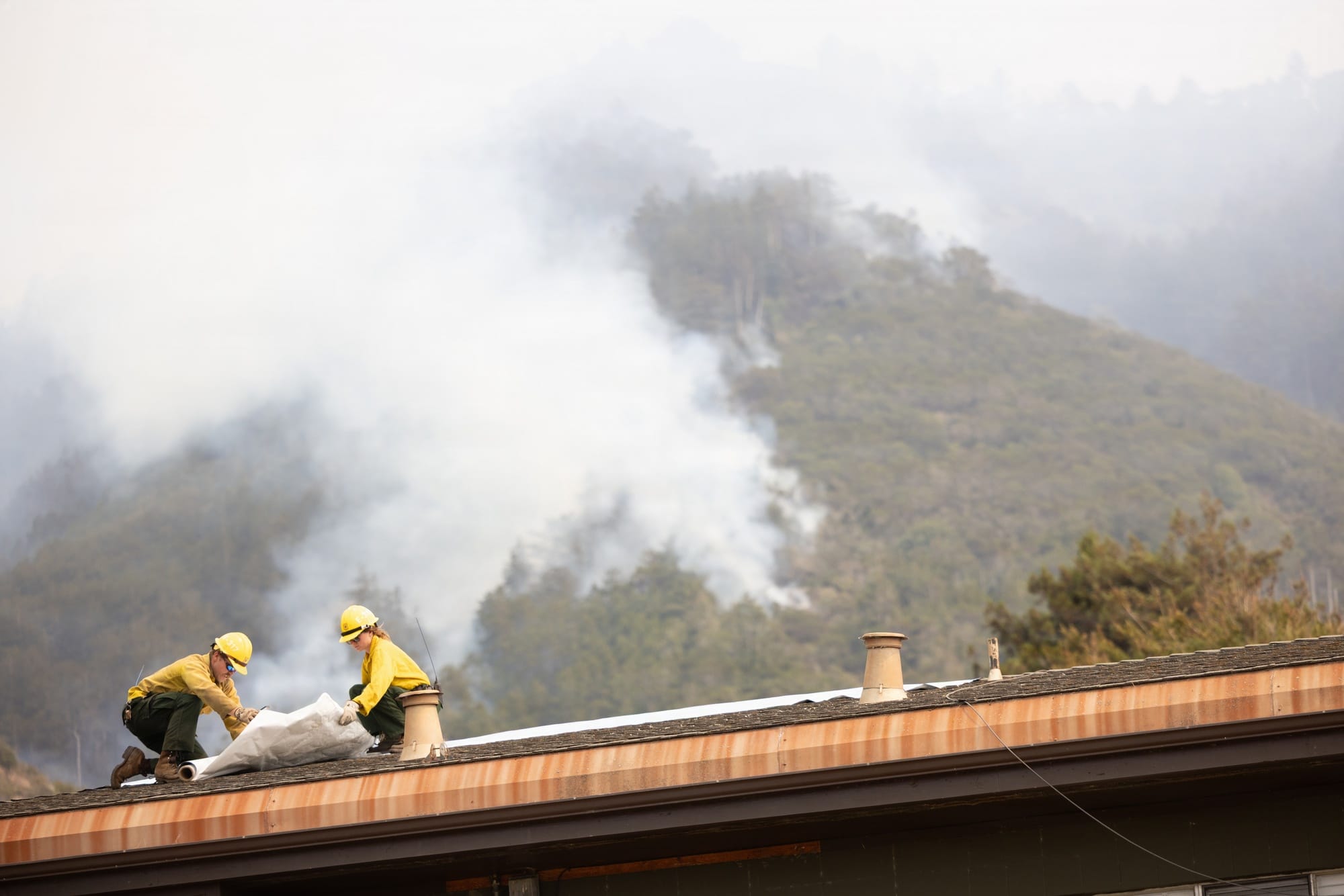
The arrival of fire and embers is often unknown, even to professionals, and typically occurs after a major evacuation is ordered. When professional agencies need to protect high-value lookouts, historical buildings, or critical infrastructure such as bridges or buildings, they don't just clear the brush; they wrap the structure in aluminum structure wrap to stop embers and radiant heat from reaching critical areas. This breaks the last link in the wildfire combustion chain, the home or structure itself.
The field data is staggering: In a USFS review of 1,873 wrapped structures between 2017 and 2023, the success rate was 98.4%. The very few failures (29) reinforce the core lesson: under the right conditions, any structure can burn, but sealing the final vulnerability dramatically improves survivability.
Scaling the Solution for Insurers
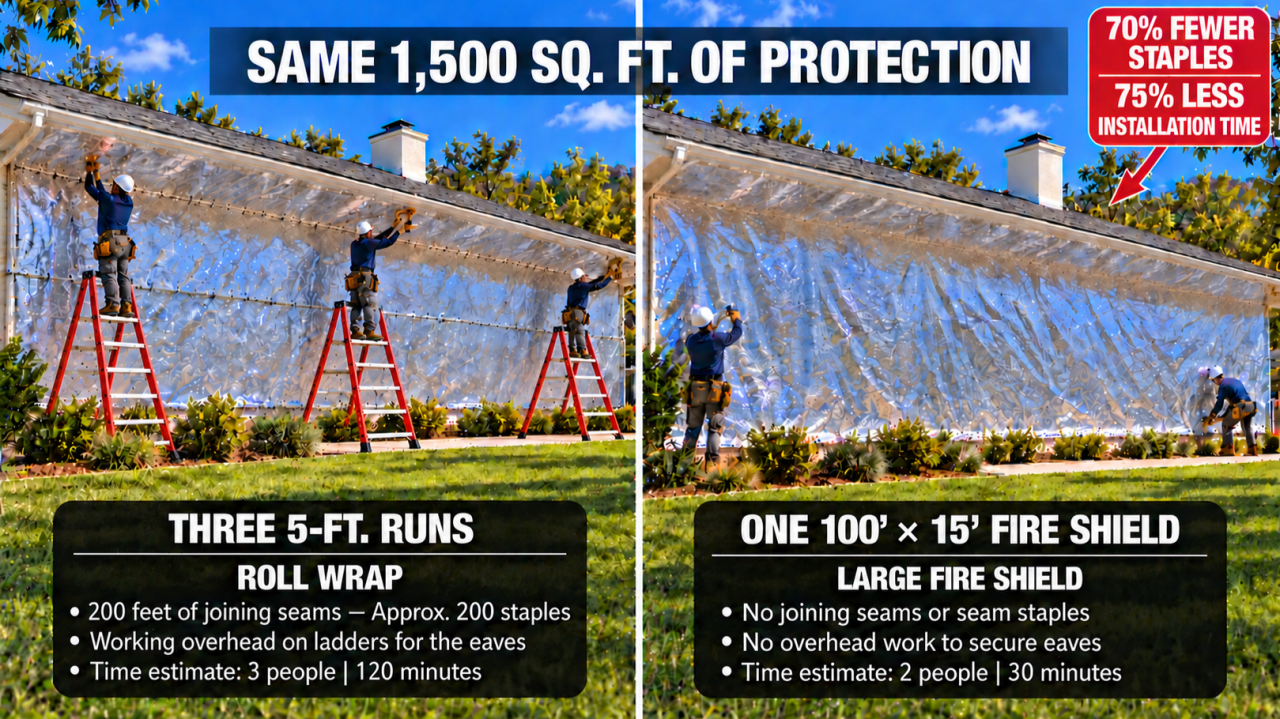
Historically, the barriers to this kind of protection were the timely delivery of the wrap prior to evacuations, deployment time, and labor, due to the legacy wrap being available only in 5-foot widths. But new distribution strategies and lighter, stronger shields are now available in 10- to 20-foot widths, allowing a single Fire Shield to cover 2,000 square feet in minutes. This eliminates roughly 300 feet of seams and reduces installation time to a few hours. This enables a rapid DIY Wrap-and-Leave approach. And these Fire Shields will continue to protect from future wildfires for 10+ years.
Major wildfires remain active for weeks before full containment, creating a substantial operational window for tactical mitigation. Insurers no longer have to wait for a loss to occur before acting. By combining foundational home hardening with professionally deployed aluminum barriers, carriers can add a tactical layer of protection that addresses remaining ignition vulnerabilities before an exposed structure becomes a claim.
The question is no longer whether tactical mitigation deserves consideration, but how quickly it can be tested, measured, and scaled.
Series: Rethinking Wildfire Mitigation for the Insurance Industry, Part 1: The Combustion Gap. Future articles will examine fire types, mitigation trade-offs, barrier limitations, and the role of a layered defense.
Sources
- National Institute of Standards and Technology, Technical Note 2205, WUI Structure/Parcel/Community Fire Hazard Mitigation Methodology, 2022.
- CAL FIRE, Damage Inspection Program (DINS) structure damage data.
- CAL FIRE Office of the State Fire Marshal, Building in the Wildland.
- Taxpayers for Common Sense, Clearing the Smoke on Wildfire Spending: Database Edition.
- California Wildfire and Forest Resilience Funding, Proposition 4 Climate Bond allocations.
- U.S. Forest Service / Interagency Structure-Wrap Field Review, 2017-2023.