My last article asked why effective structure wrap has not been used more widely. Despite its huge success, the answer was scale: five-foot rolls protected important structures, but covering a full-size home demanded substantial labor, ladders, seams, staples, and time. Next Gen Fire Shields changed that.
That leads to another question: How much wrap has actually been used, and what has it protected?
The Record Is Larger Than Most People Realize
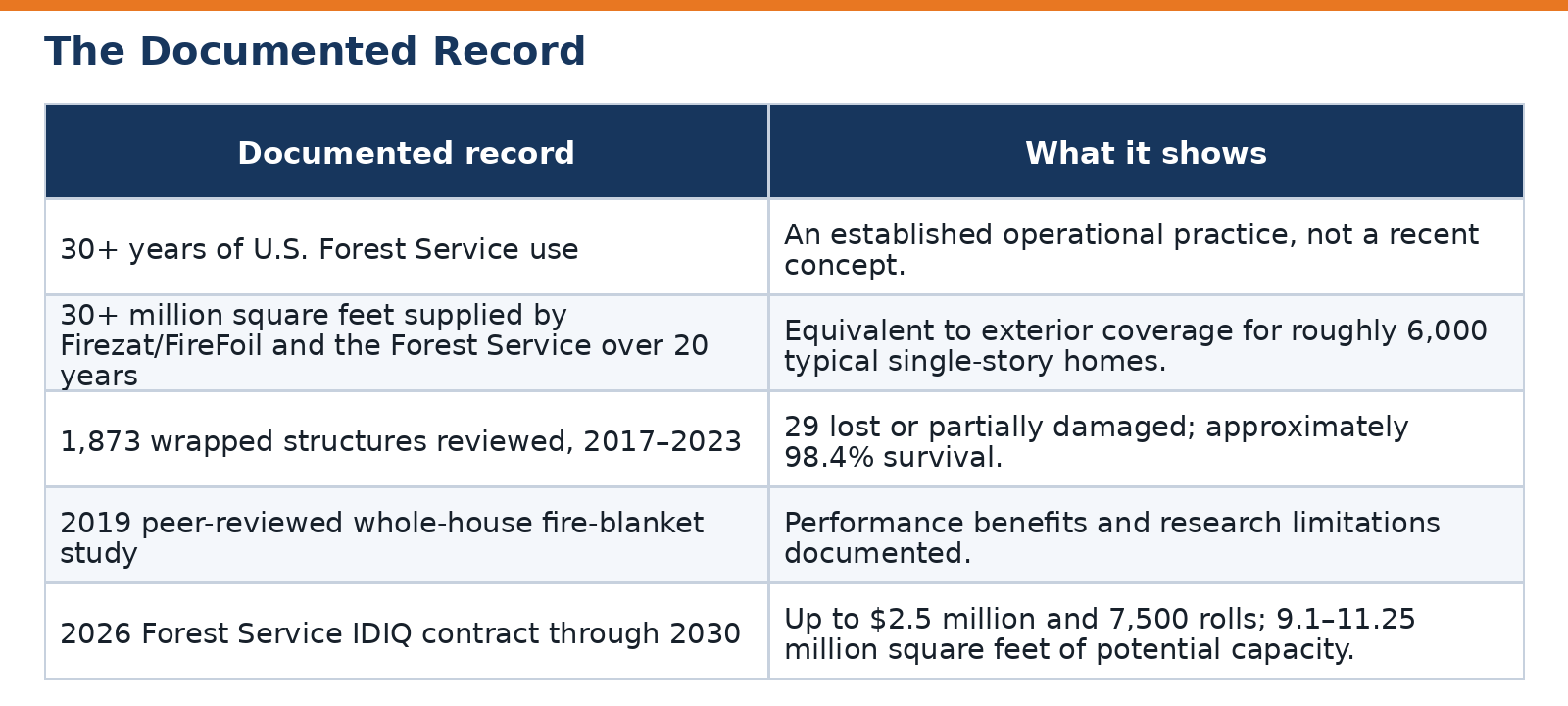
The 2026-2030 Forest Service IDIQ contract for 7,500 rolls represents another 9 to 11 million square feet of wrap, depending on roll length, showing that wrap remains an active operational resource rather than a historical practice.
These figures document a long-running strategy supported by field deployments, continued purchasing, peer-reviewed studies, and measurable results.
It Began with Assets That Could Not Be Replaced
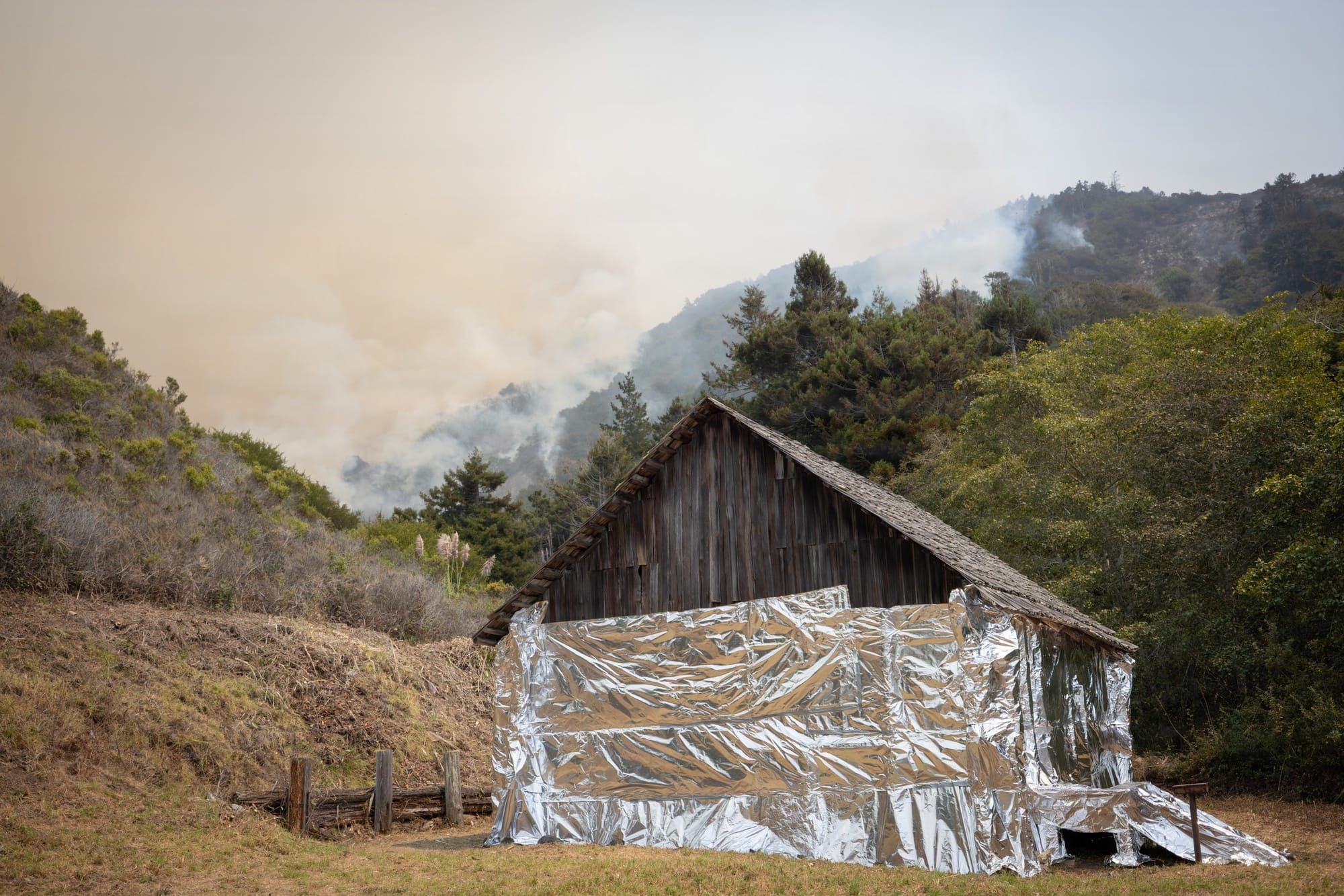
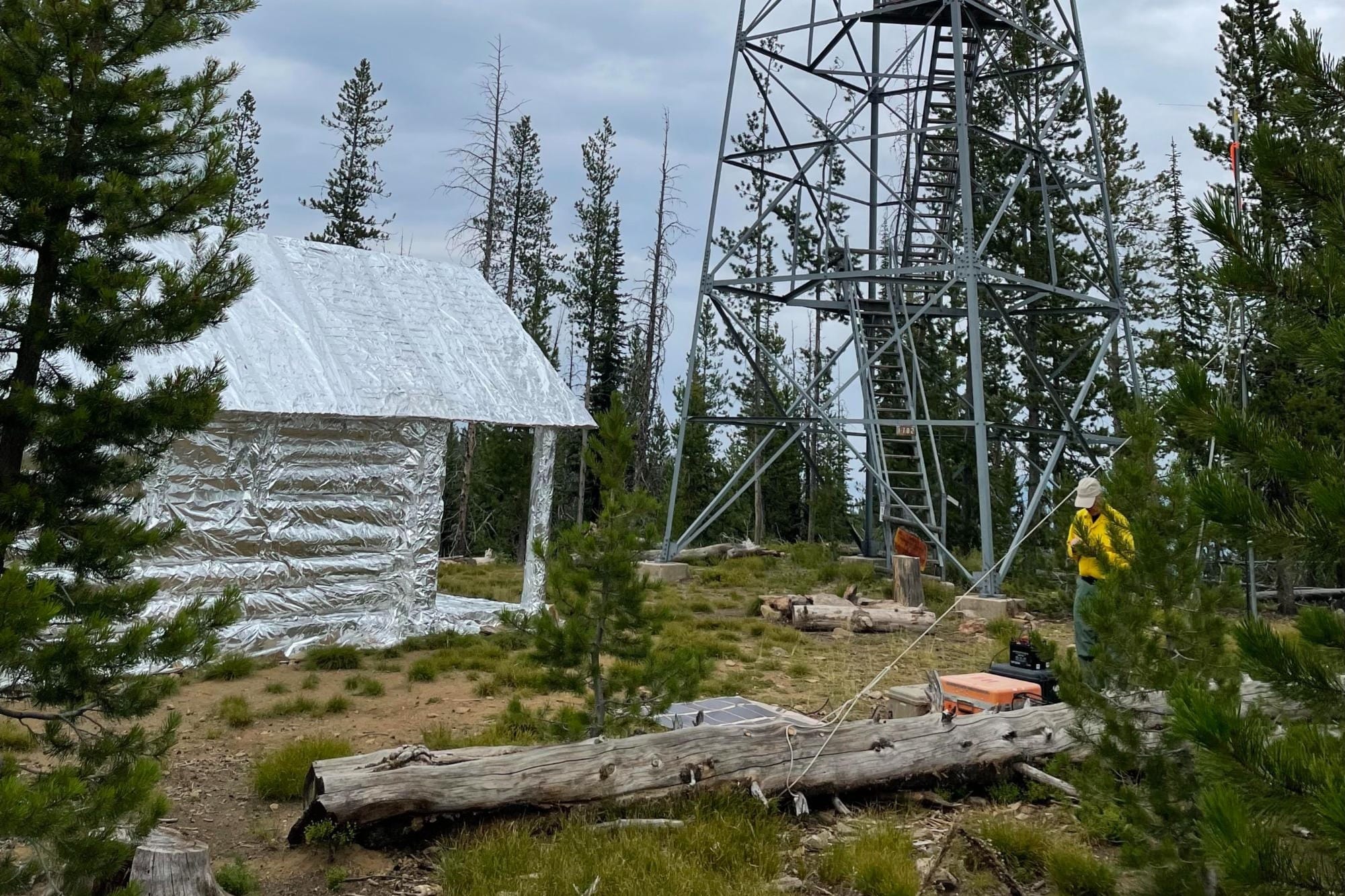
Early protection targets included remote fire lookouts, ranger stations, and cabins. Once wildfire entered the area, these buildings were difficult to reach, and crews could not depend on safe evacuation.
Fire arrival was uncertain. Roads could close, and visibility could disappear, making ingress and egress dangerous. When planning structure protection, all effective mitigation strategies are considered: sprinklers, gels or foams, and aluminum structure wrap. The wrap allowed crews to prepare the structure safely, leave, and maintain protection without water, electricity, chemicals, or further human intervention, with minimal potential failure points.
For an irreplaceable lookout or historic cabin, the decision was practical: compare wrapping time and cost against permanent loss. Strong field results made the decision easier.
Success Expanded the Mission
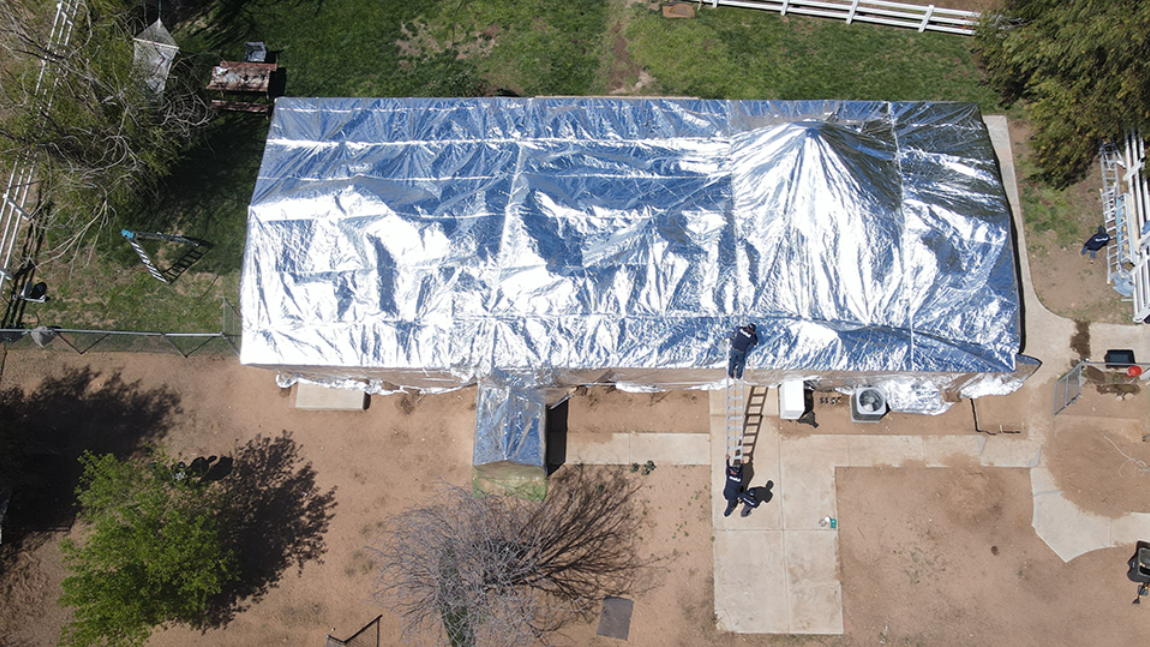
Use expanded beyond lookouts and ranger stations to recreation cabins on Forest or BLM land, historic districts, cultural resources, park buildings and workshops, trail bridges, infrastructure, landmarks, and even giant-sequoia bases. It was often used to wrap a strategically located home to help stop structure-to-structure fire spread and protect the surrounding neighborhood.
Use was driven by consequence. These assets were historic, irreplaceable, operationally important, or expensive, where fire timing and firefighter access were uncertain.
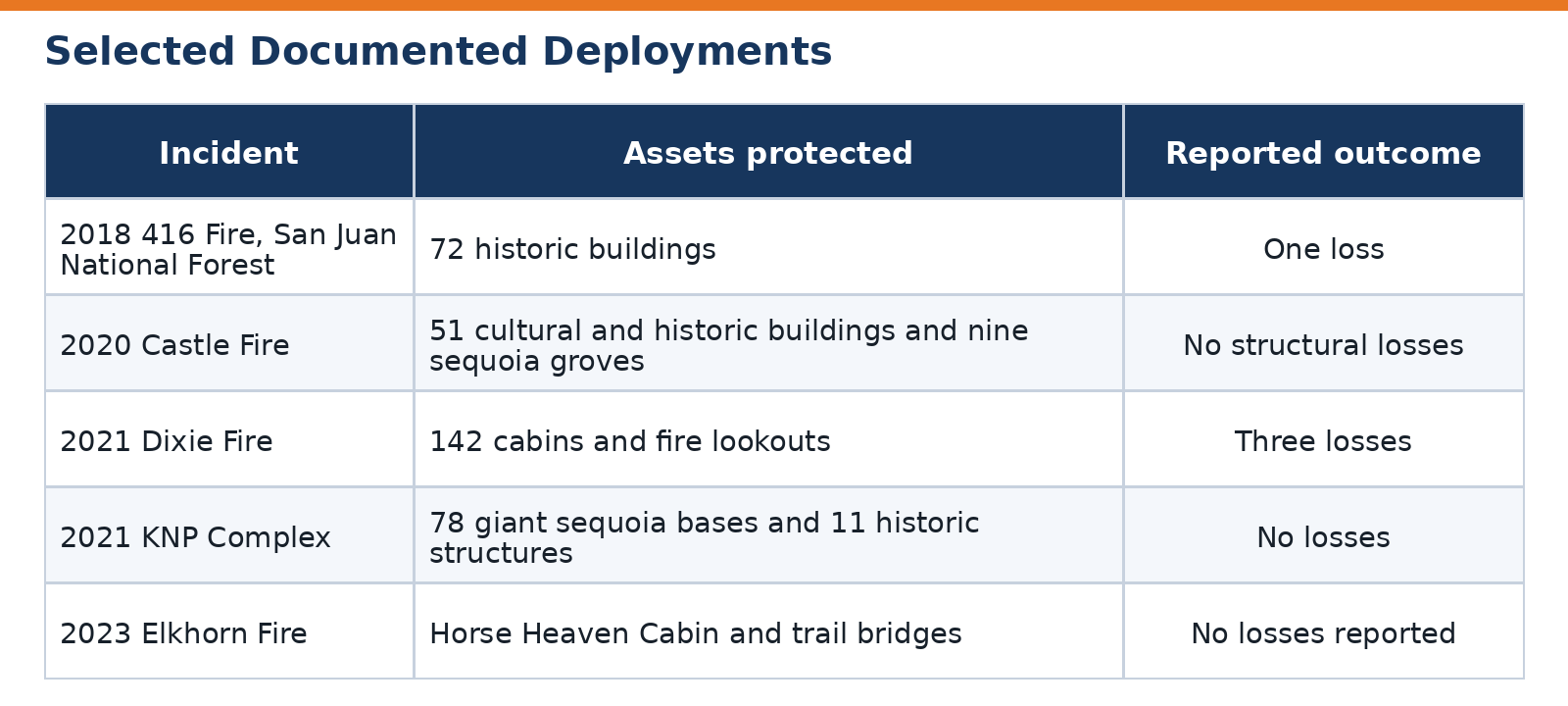
These real incidents, not controlled demonstrations, show why agencies continued using wrap when exposure, access, timing, and asset value justified deployment.
The Material Has Changed Too
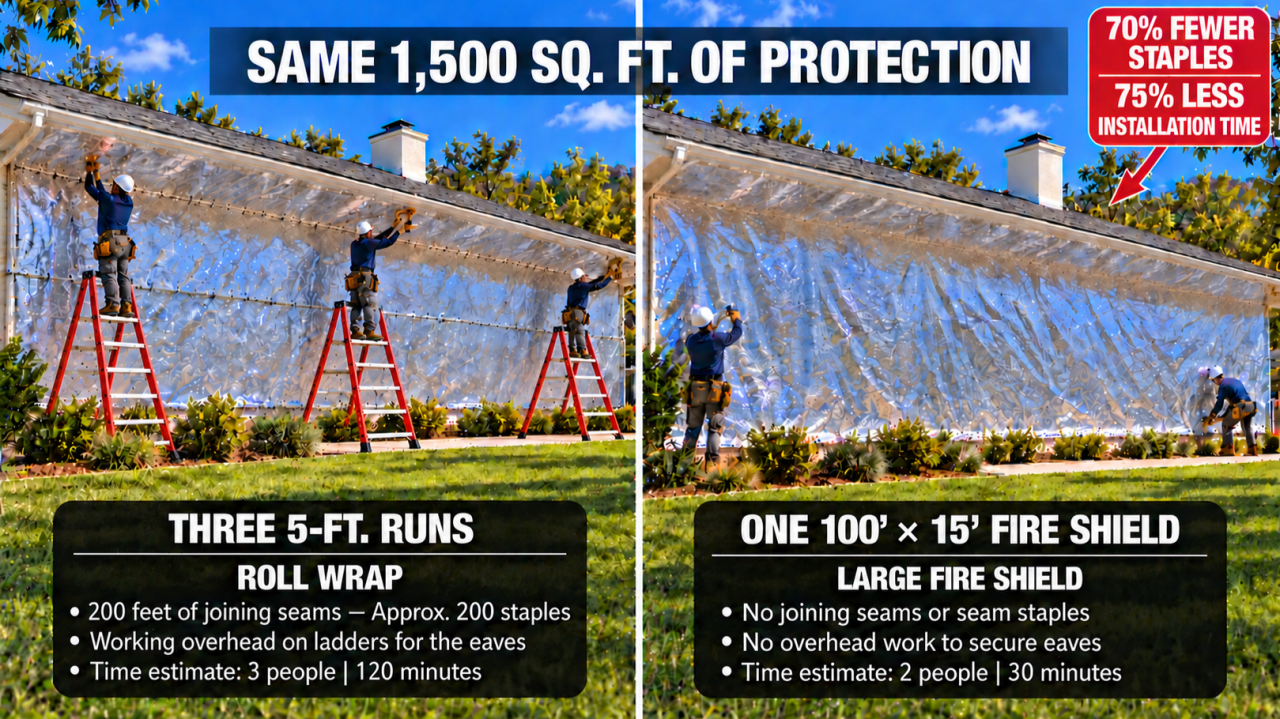
Today’s next-generation wrap is designed for large homes and estates. Traditional five-foot rolls must be installed in multiple layers, creating long joining seams that require more time, labor, ladder movement, and hundreds of staples to seal.
A single large Fire Shield measures 20 feet by 100 feet, provides 2,000 square feet of coverage, and weighs only 56 to 72 pounds. Depending on the structure, three to five shields can cover a home in a few hours with just a few people. Each shield can run from the roof edge, under the eave, and down to the foundation, replacing multiple roll layers and much of the seam work between them. Fewer pieces mean fewer seams, fewer attachment points, and less impact on the structure.
Current shields can be removed, inspected, stored, and reused for more than 10 years. If a section is damaged, it can be cut out and replaced in minutes. The cost is no longer tied to one fire; protection remains available through multiple fire seasons and evacuation events.
What This History Tells Us
The history of structure wrap is not one of limited use because it failed. Use expanded where success justified the time, labor, and cost. The challenge was adapting it to full-size homes quickly and affordably enough for homeowners and insurance carriers at scale.
It's ironic that something used for more than 30 years to protect some of our most precious and irreplaceable historic treasures receives so little recognition. It has done its job repeatedly. Now we have the opportunity to make that protection practical for far more homes and cut insurance losses and premium costs. Structure wrap is like the hero who saves someone, then quietly walks away without waiting for attention.
See It in Action
Sources
- U.S. Forest Service, Structure-Protection Wrap Performance Review, 2017-2023, presented at the 2024 Wildland-Urban Interface Conference.
- Fumiaki Takahashi, “Whole-House Fire Blanket Protection from Wildland-Urban Interface Fires,” Frontiers in Mechanical Engineering 5 (2019): 60.
- U.S. Forest Service, Structure Protection Wrap NFES 0881 IDIQ procurement, notice 1202SC26Q2705, 2026-2030.