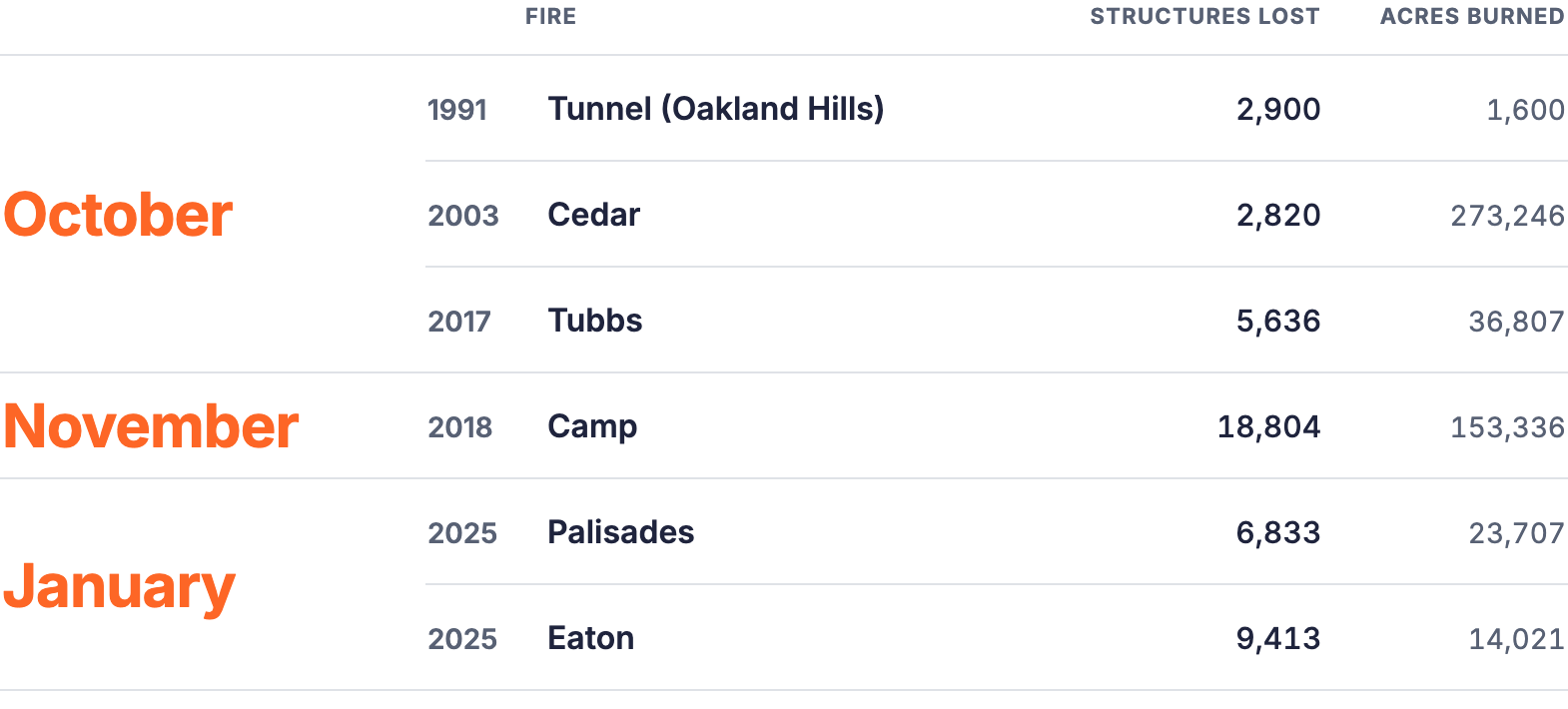
A house does not have to burn to become a major wildfire claim. The cost is becoming harder to ignore.
After more than 22 years in wildfire mitigation and structure protection, I have learned to pay attention to what crews see in the field. Sometimes an incident tells us something about fire science and mitigation techniques that goes beyond current best practices. Beyond protecting against embers and radiant heat, the structure wrap envelope may offer another important benefit: reducing smoke damage inside a home that survives a wildfire. That benefit will also extend to nearby homes that were wrapped for protection, even if the fire never reached them.
The U.S. Environmental Protection Agency (EPA) provides a useful starting point in its wildfire smoke guide: “In general, buildings should be operated at slight positive pressure in order to keep contaminants out.” That guidance addresses offices and commercial buildings, but the airflow principle is relevant to the opportunity we see for wrapped homes.¹
An American Property Casualty Insurance Association (APCIA) joint-trades survey examined nearly 69,000 residential wildfire claims from major fires since 2017, including more than 19,000 involving only smoke, soot, or ash damage. Average smoke-only claim costs were 112% higher for the surveyed 2025 fires than for the 2017–2018 fires, even after adjusting for inflation. Smoke damage has become a major loss category in its own right, with cleaning, contents replacement, and temporary housing adding to the cost of a home that is still standing.²
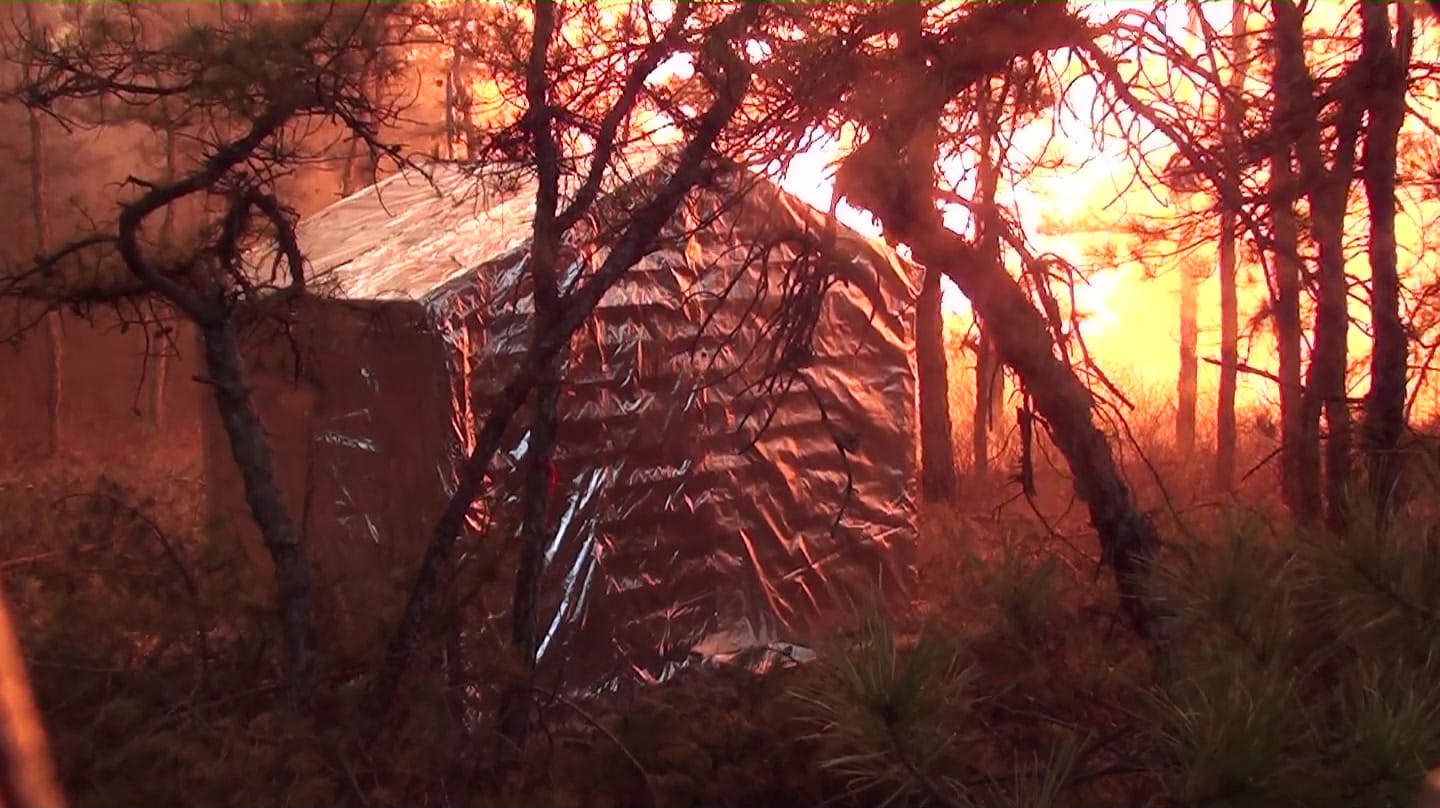
In a previous article, I shared an incident reported to me by a Forest Service fire commander. A large burning branch had fallen onto the roof of a wrapped home and burned down to ash. Enough heat passed through the wrap to char and smolder the roofing material beneath it. According to the commander, the wrap formed an envelope around the roof, restricting airflow and limiting the oxygen available to support open flames, so it was slowed to a charring event.
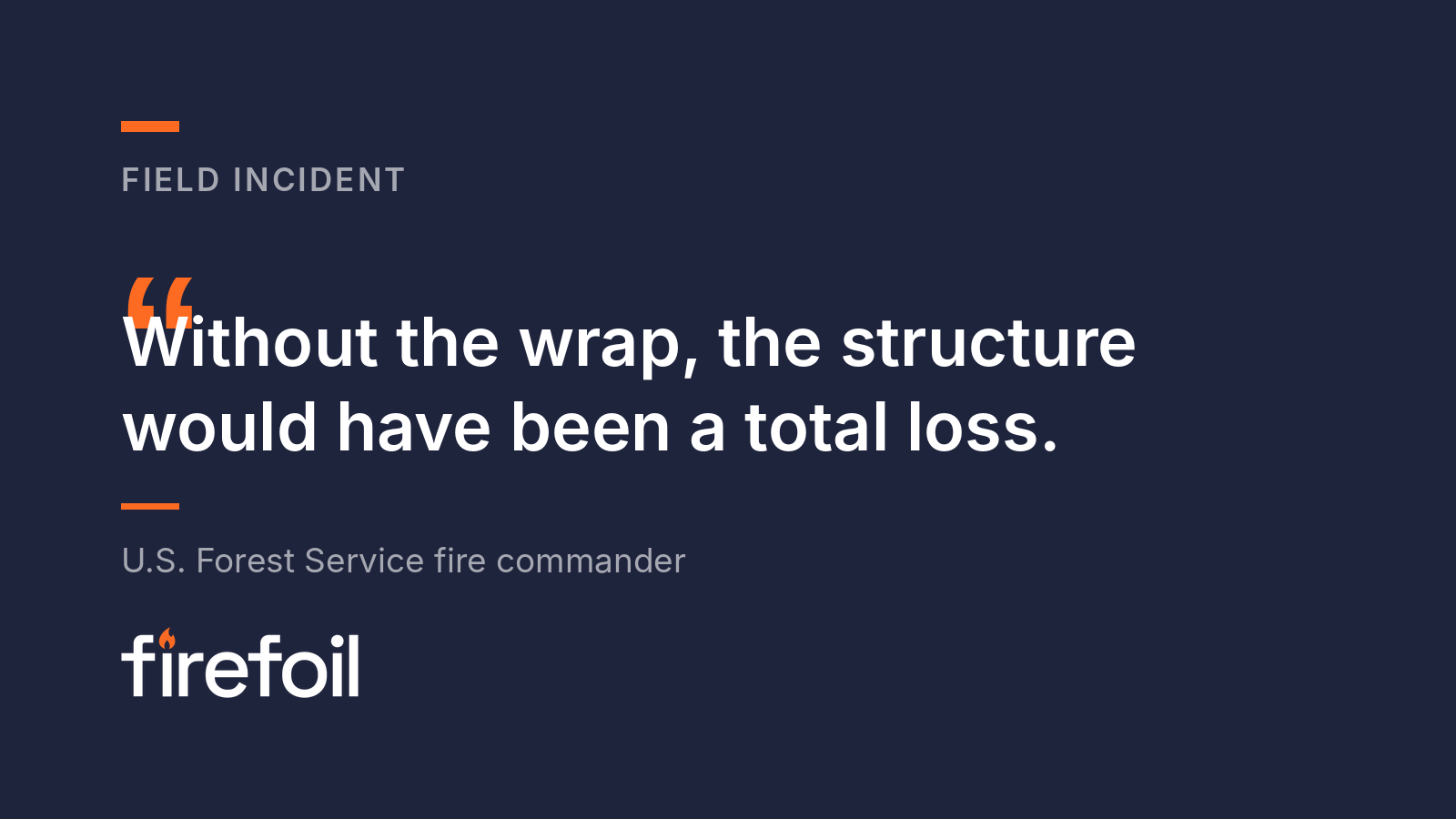
He estimated that the roof remained in that condition for 12 to 18 hours. When a firefighter lifted the wrap and fresh air reached the heated material, it flared up, almost knocking him off the roof. The commander believed the home would have been a total loss without the wrap. Instead, a section of the roof needed to be replaced.³
That account has stayed with me. It suggests the wrap was doing more than separating the roof from the burning branch. It was also restricting the air reaching the heated material. That is what leads me to the smoke question: if a continuous barrier can limit air movement at the structure, could it also reduce the smoke carried through its vulnerable openings?
Strong wildfire winds create different pressure zones around a house, with higher pressure on windward surfaces and lower pressure elsewhere. These differences push or pull air through vents, cracks, joints, and gaps around doors and windows, carrying smoke and contaminants into the home.
A continuous exterior wrap creates an envelope around the structure, covering those entry points and reducing airflow through them. The wrap does not eliminate wind pressure, but it limits the pathways through which pressure differences push or pull smoky air inside.
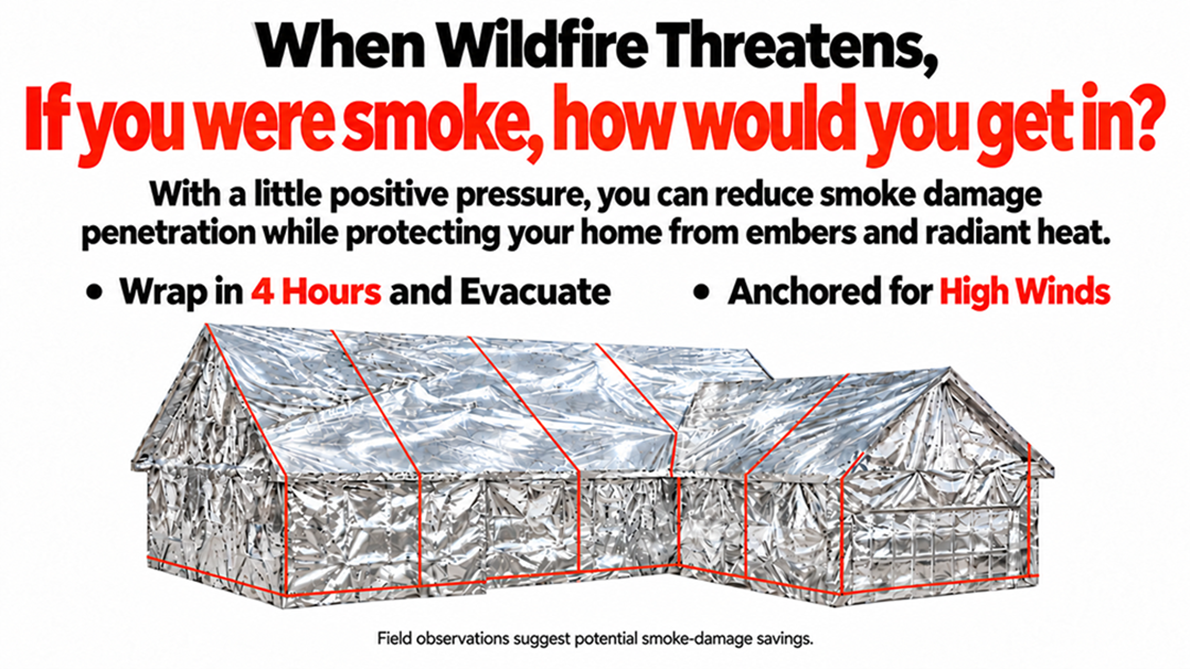
A small air-filtration unit configured to supply filtered outdoor air could add another layer of protection. By maintaining slight positive pressure inside the home, as recommended by the EPA and Chubb, that supply encourages air to move outward through remaining gaps to under the wrap, helping reduce smoke entry. Simply recirculating indoor air does not create positive pressure.
Practical smoke mitigation steps still matter: close doors and windows, fireplace dampers, seal gaps, and set HVAC systems for smoke conditions. Close unfiltered fresh-air intakes or select recirculation mode when appropriate. Use a MERV 13 or higher filter if the system can accommodate it. Do not use bathroom and kitchen exhaust fans, attic fans, clothes dryers, and other equipment that exhausts indoor air. For more detailed guidance, Chubb offers an excellent resource on developing a wildfire smoke mitigation plan.⁴
Less smoke entering a home will mean less contamination of furnishings and finishes, less remediation, and a shorter displacement for the family. Defensible space and home hardening remain essential. When there is time to deploy structure wrap before evacuation, we have an opportunity to address another part of the loss equation.
Insurance carriers and fire agencies can now make smoke mitigation part of structure-protection planning, using every opportunity to reduce claims and help families return to a safer home sooner.
Sources
¹ EPA wildfire smoke guide, 2021, Chapter 3 and Appendix D
² APCIA insurer perspectives, January 12, 2026, slide 42
³ Field Incident: 18 Hours of Smoldering, supplied article recounting a Forest Service commander’s account, approximately 2009
⁴ Chubb, Developing a wildfire smoke mitigation plan
#WildfireMitigation #PropertyInsurance #LossPrevention #RiskManagement #CaliforniaDepartmentOfInsurance