Key takeaways
- Embers, not the flame front, start most house fires. In the worst-hit suburb of the 2003 Canberra bushfires, not one of 229 surveyed houses was ignited by direct flame from the front.
- Embers ignite gaps, not surfaces. A quarter ounce is enough in a half-inch gap. A flat surface with no gap needs ounces per square foot. FireFoil works on exactly that mechanism, putting a continuous noncombustible layer over the joints, vents and edges embers exploit.
- The fire front is over in about a minute. A burning neighbor is not. That is why separation distance predicts loss better than flame length, and why FireFoil is a deployable shield sized to that window rather than a permanent building material.
- Aluminized assemblies have peer-reviewed evidence against radiant and convective heat, up to 96 and 92 percent in the tested configurations, and they put a direct physical barrier over the openings embers use.
Three exposures, not one
The most confusing wildfire advice out there is that you are defending your structure from fire. In reality, a wildfire attacks a house three ways: burning embers, radiant heat crossing open air, and convective heat, meaning moving hot gas and direct flame contact. They arrive on different schedules and against different parts of the building.
Embers start the most house fires. Radiant heat decides whether a burning neighbor takes yours. Direct flame contact is the rarest of the three outside dense neighborhoods, and it is the one most people picture. FireFoil is built to protect best against the two that actually cause most of the loss.
Embers: the one that does the damage
The clearest measurement in the field comes from the 2003 Canberra bushfires, which killed four people and destroyed around 500 homes on 18 January 2003. Investigators surveyed 229 houses in Duffy, the worst-hit suburb, and found that no houses there were directly impacted by flames from the fire front itself. Half ignited from embers alone. Another 35 percent ignited from embers plus radiant heat off nearby vegetation or other structures, with the remaining 15 percent coming from vegetation beside the house, dominant radiant heat, and other sources.
Not one house in the survey was ignited by the wall of flame that many imagine when they think of a wildfire.
CAL FIRE's Office of the State Fire Marshal estimates that 60 to 90 percent of home ignitions occur because of embers.
Where embers collect is crucially important. Full-scale testing at the Insurance Institute for Business and Home Safety (IBHS) found ember mass concentrates along the base of the wall, peaking right where the wall meets the ground. NIST looked eight to ten feet higher at the eaves and found that if there no vent in the assembly, embers did not pile up underneath it, but if you put in a vent, they immediately collect there and threaten ignition.
Those two results fit together. Mass collects at grade and look for openings they can get into as you move up the side of the structure.
How much ember mass it takes depends almost entirely on geometry of the gaps that those embers fill. A flat panel with no gap at all needed 1.5-5 ounces per square foot before it would ignite (Zhu & Urban 2024), while a deck built with 5 mm gaps between the boards ignited at a 0.2-0.3 ounces per square foot (NIST TN 1778), and a 10 mm gap became a smoldering fire with just 0.25 ounces (Dowling 1994, reviewed in NIST TN 2153).
A bare wall is a hard target. A gap is an easy one.
How FireFoil protects against embers. Embers needs to land somewhere where they can pile up and breathe. Take away either one and the pathway to ignition closes. The arriving embers are small: in full-scale structure burns, more than 90 percent of firebrands weighed less than one gram and had under an inch and a half of projected area.
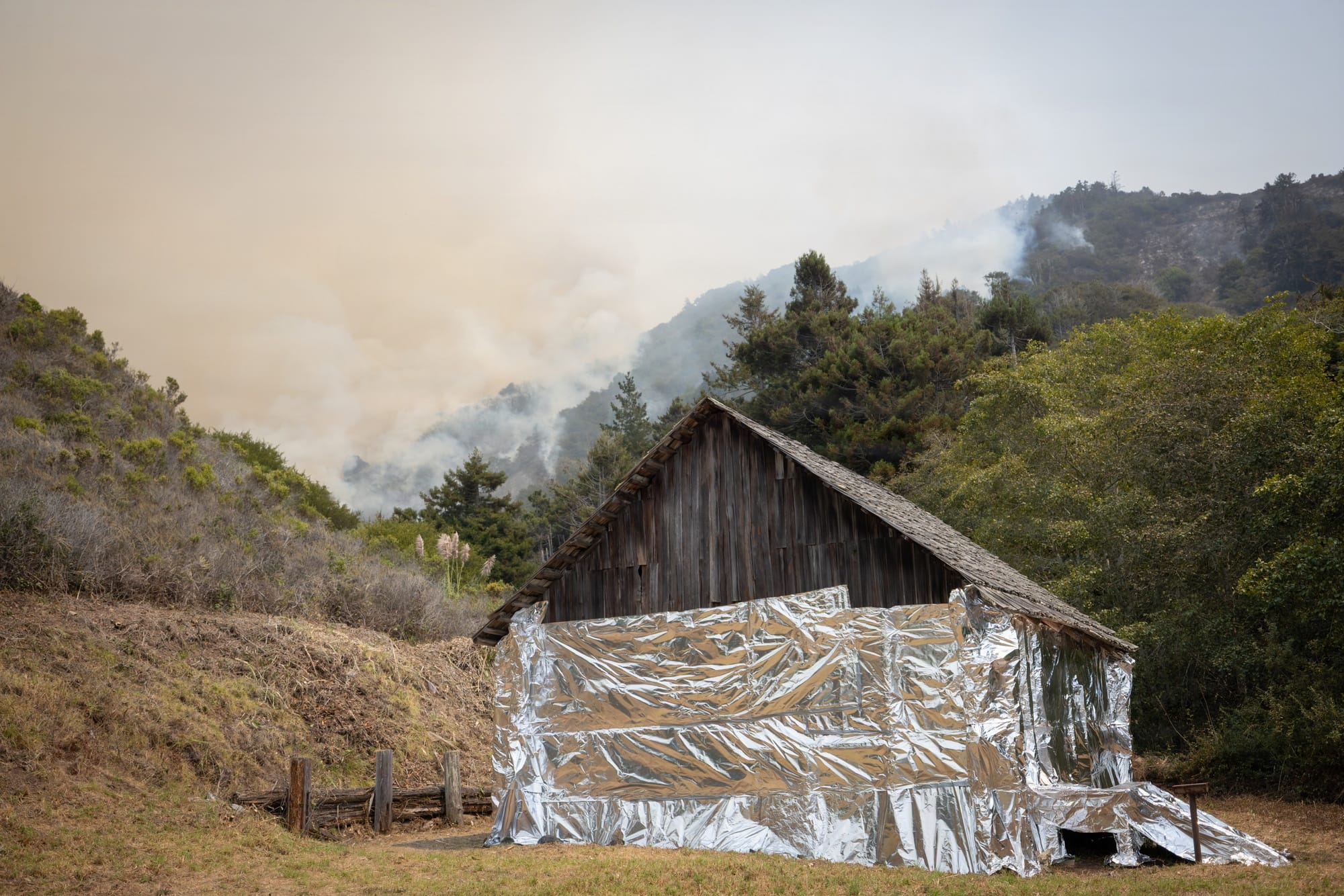
FireFoil puts a continuous, noncombustible aluminized layer over the joints, vents, edges and openings those embers exploit. A sub-gram ember landing on it has nothing to ignite and nowhere to collect, and the openings it would otherwise blow into are covered.
Radiant heat: the front is brief, your neighbors are not
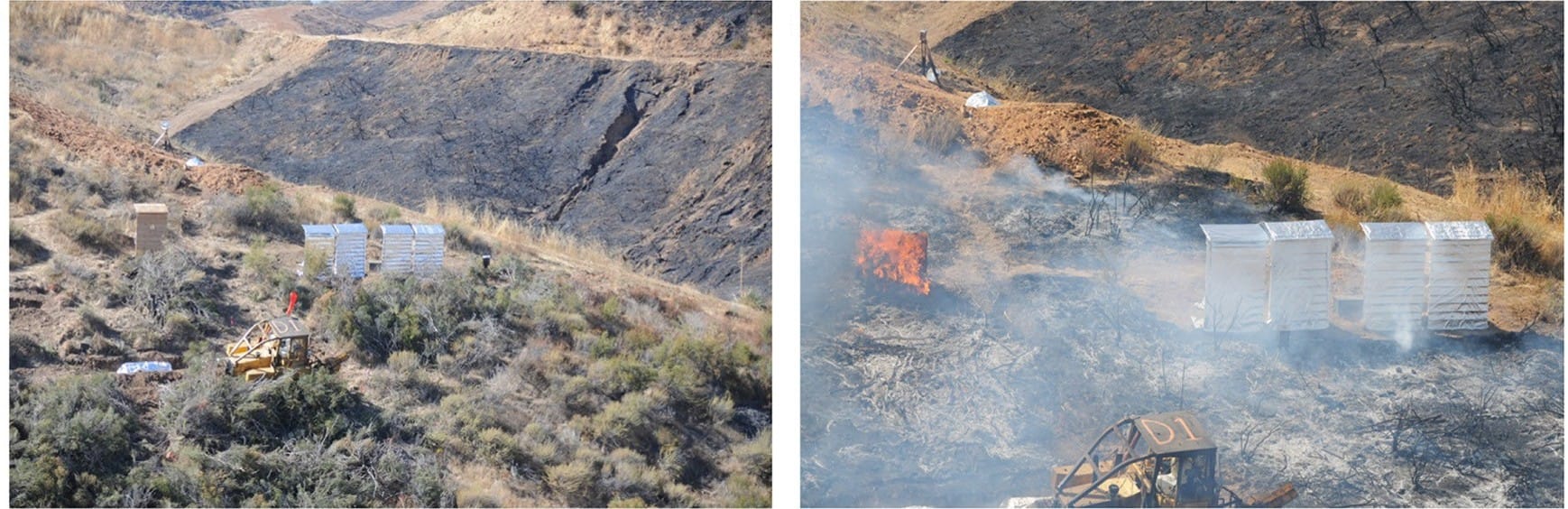
Radiant heat can ignite your house without a flame ever touching it. Wood lights at about 12.5 kW per square meter once there is a pilot source such as an ember. Seven experimental crown fires were burned past instrumented wood walls standing 33, 66 and 98 feet away. At 33 feet those walls took peak exposures of 38 to 150 kW per square meter, three to twelve times the ignition threshold, and three of the seven caught fire. Nothing ever touched them.
It happened fast. Those walls sat above the ignition threshold for 35 to 79 seconds while the fire front went past, and the flames were on any one spot for only 26 to 41 seconds. At 66 feet and beyond, nothing ignited at all. That mirrors the shape of a wildfire front: violent, close, and usually over in about a minute.
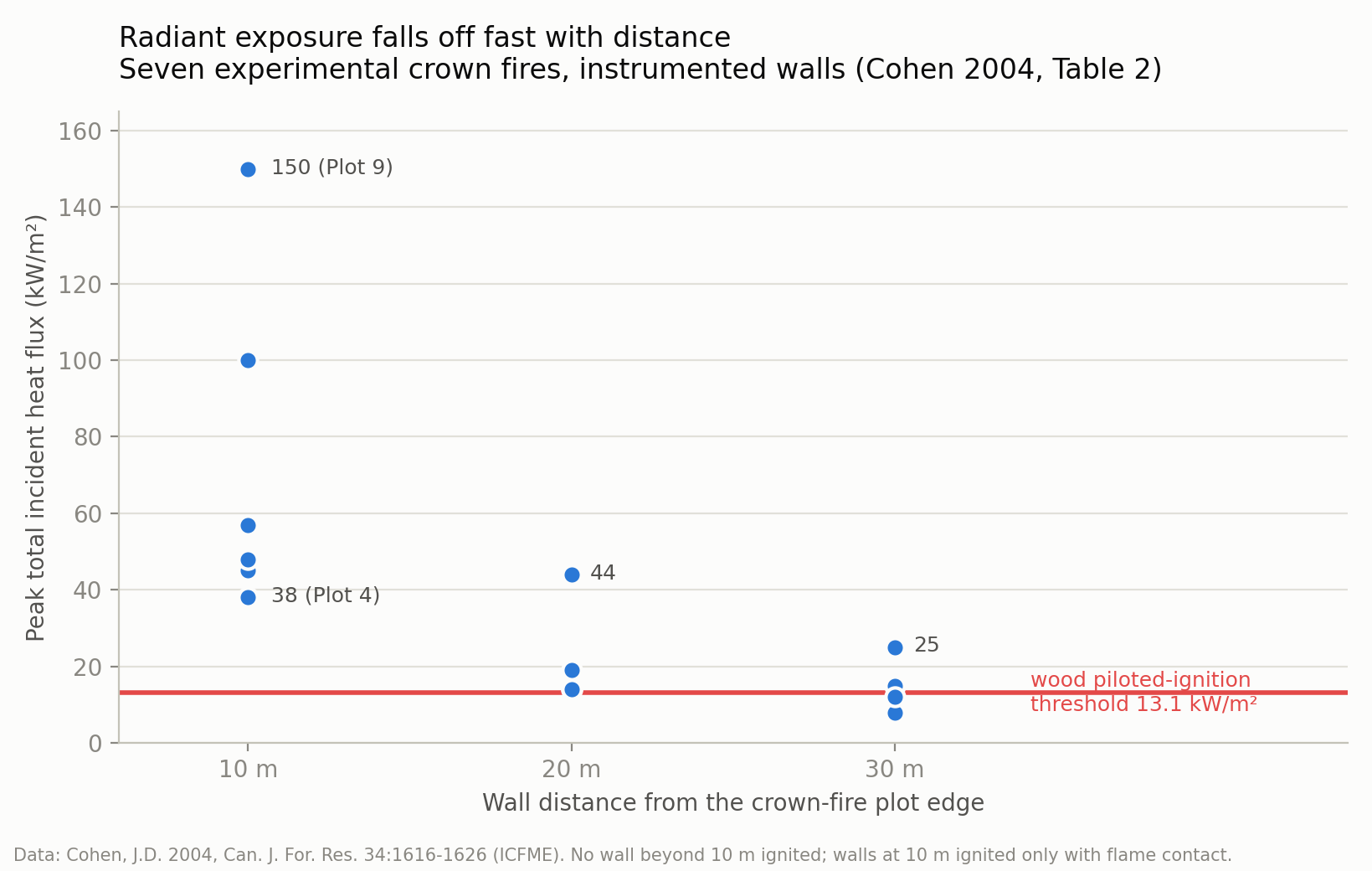
A burning building next door is a different problem. One documented training burn produced its highest radiant exposures across a 45 to 60 minute window: same house, similar peak flux, an exposure lasting thirty times longer.
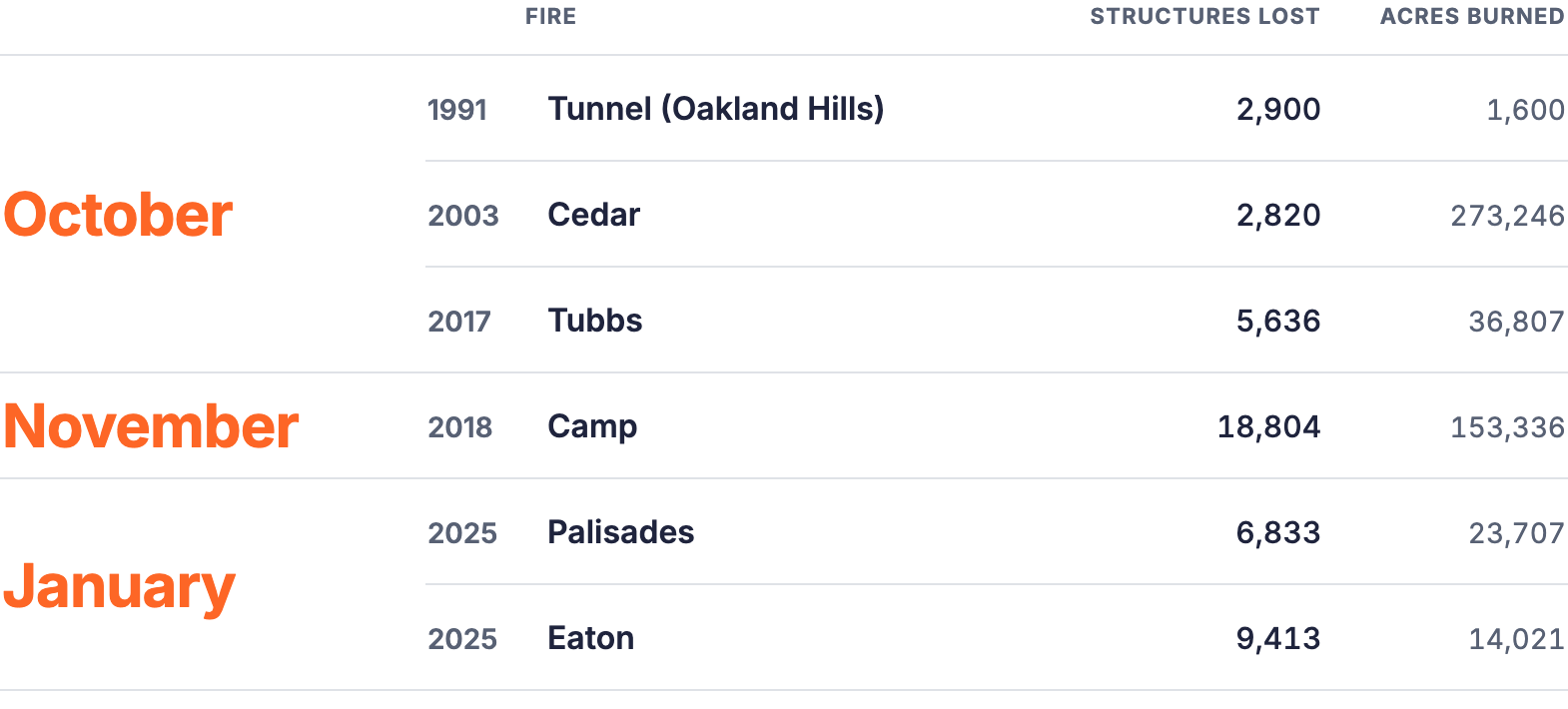
Which is why separation distance is the single strongest driver of predicted loss, as proven by a Department of Insurance study of 47,742 structures in five California fires. IBHS found that beyond 50 feet of windward separation, damage in Lahaina was minimal but rose sharply below 30 feet.
How FireFoil protects against radiant heat: this is where the published evidence is strongest. Peer-reviewed testing of two-layer aluminized assemblies measured up to 96 percent of incoming radiation blocked. Run that against the worst exposure recorded in those crown fire experiments, roughly 150 kW per square meter at 33 feet, and what reaches the wall behind the shield is in the single digits, comfortably under wood's ignition threshold. The mechanism is straightforward: a reflective surface turns radiant heat around before it reaches anything that can burn.
Convective heat: it concentrates at the eave
Convective heat is moving hot gas and direct flame contact, and it rises with wind speed independent of anything about the flame, and it concentrates at the eaves.
NIST burned sheds against a target eave assembly and measured about 10.5 kW per square meter at the eave, with ignition starting as glowing at the sharp edges, corners and joints of the rafters. The California loss record agrees from the other direction: across CAL FIRE inspection records for 41,717 fire-exposed structures, eaves consistently explained more than any other structural parameter.
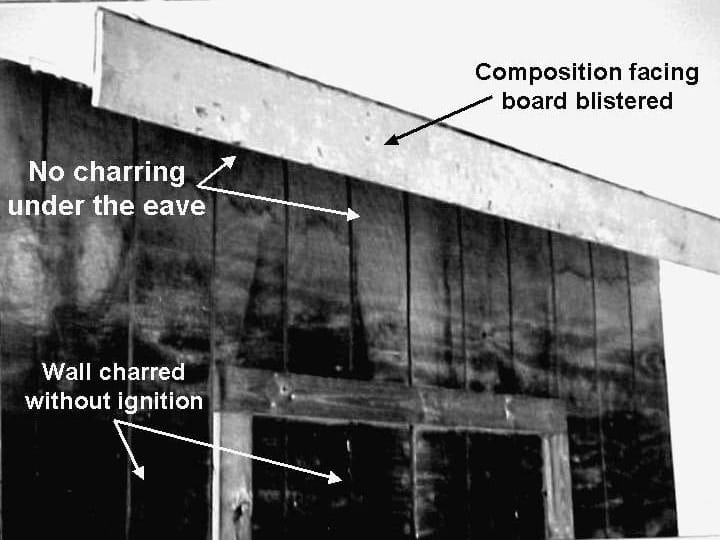
How FireFoil protects against convective heat: the same tested assemblies blocked up to 92 percent of convective heat. Just as important is where the shield reaches. The eave is the hardest part of a house to protect permanently and the part the loss data says matters most, so a shield that stops at the wall line leaves the problem uncovered. Coverage matters as much as material.
The FireFoil difference: Wider-widths
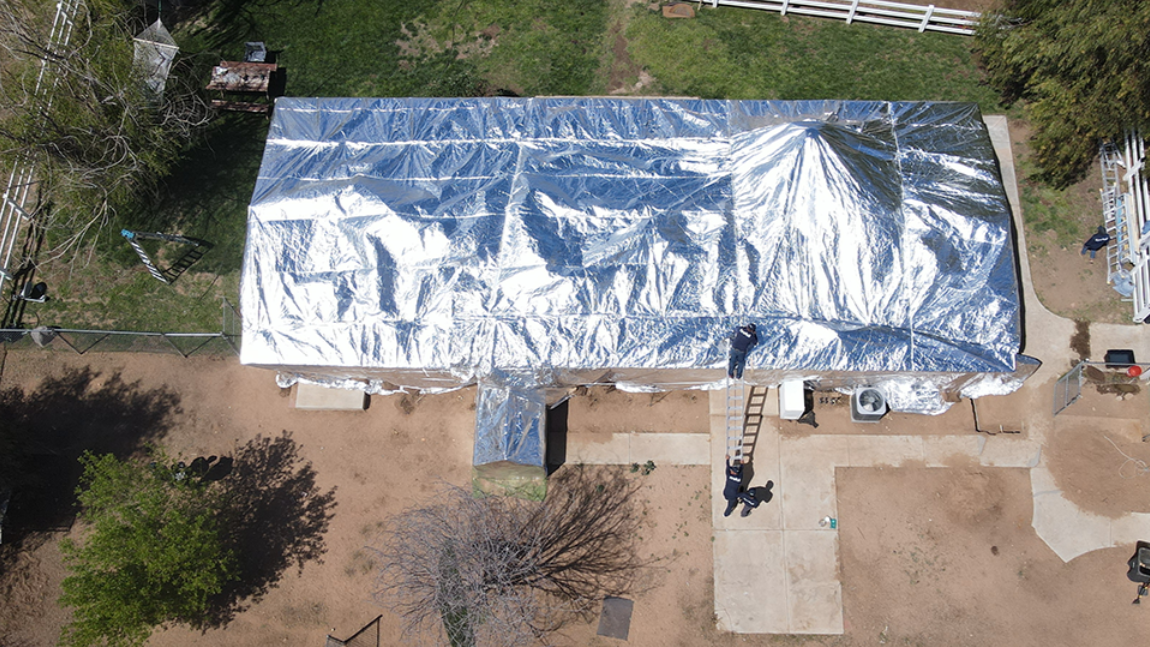
Most aluminized wrap is made narrow, which means a wrapped house is a quilt of seams. FireFoil fabricates in 5, 10, 15 and 20 foot widths, and we are the only large-scale domestic producer of wide-width fire shielding.
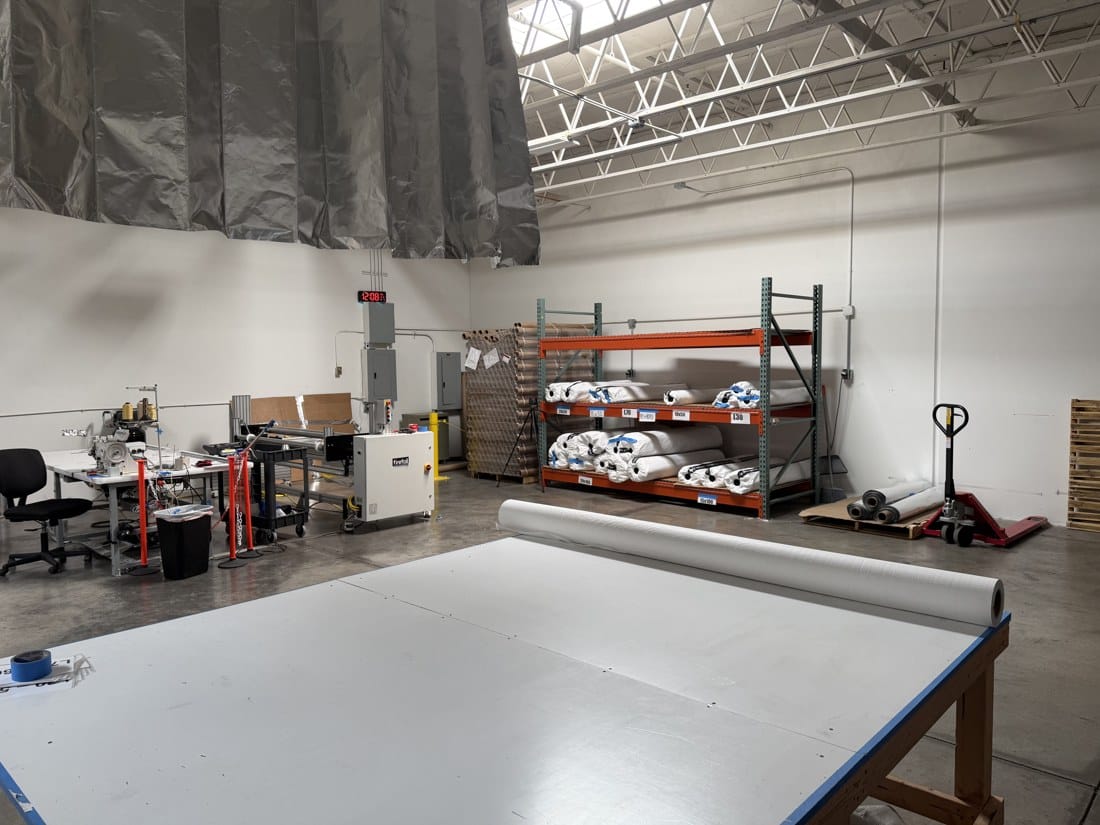
Seams are where the three problems above meet. Every seam is an edge for wind to catch and peel, or for embers to find there way in and pool against the surface underneath.
Separately, every seam adds time to your deployment, when time is often your most precious resource. Fewer, wider panels means faster installation, fewer edges exposed to wind shear, and fewer places for embers to find their way behind the shield.
What you can do about it
- Go after gaps. Joints, deck board gaps, vent openings and the fascia-to-sheathing gap are where a quarter ounce of glowing wood does its work. They are also the first places FireFoil goes when you deploy it, and the reason we fabricate narrow rolls and ember-point covers alongside the wide ones.
- Keep the first five feet clear. IBHS ran 174 separate experiments to find the distance at which a burning fuel bed stops heating a wall to dangerous temperatures. Five feet was enough along a flat wall. At corners it took seven. FireFoil does not compensate for a woodpile or a mulch bed against the siding, and nothing else does either.
- Clear the roof edge and gutters, for the litter already sitting there rather than for the embers.
- Cover the eave, not just the wall. It tops the structural loss factors and it is where hot gas from a neighboring fire collects, which is why FireFoil is cut to carry over the eave line rather than stopping at the wall.
- Know your separation distance. Under about 30 feet your dominant exposure is the building next door and it runs tens of minutes rather than one. That is the argument for full FireFoil coverage rather than a partial wrap, and for getting your neighbors to do the same.
- Ask which exposure a product was actually tested against, and under what conditions. Including ours. FireFoil publishes what the research supports and what it does not, which is why this article names the gap in ember testing rather than hiding it. A company that cannot answer that question specifically is asking you to trust a category instead of a measurement.
Note on sources: every study behind this article is linked inline, and the core research sits with its scope and its limits on our evidence page. If you think we have a citation wrong or have read a study too generously, tell us and we will correct it. If you want the material itself, find an authorized FireFoil distributor here.