September brings the end of summer and the coming of fall. Changing colors, cooler temperatures, and shortening days lead many to believe that fall marks the end of fire season. The historical record disagrees.
The coming months hold more of California's destructive record than the previous ones. That has a practical consequence, because the defensive measures you can take now to defend your home or business from a fire are different in the back half of September from those that were available back in March.
The most destructive fires come late
CAL FIRE keeps a running list of the twenty most destructive wildfires in California history, ranked by structures destroyed. Fifteen of the twenty started in September or later.
The six worst all did. Camp started on 8 November 2018 and destroyed 18,804 structures. Tubbs started in October 2017. Tunnel, the Oakland Hills fire, started in October 1991. Cedar started in October 2003. Eaton and Palisades, now the second and third most destructive fires the state has ever recorded, both started in January 2025.
Size is also a bad proxy. Tunnel burned 1,600 acres and destroyed 2,900 structures, more than Dixie did across 963,309 acres. What decides your outcome is where the fire meets your building and under what wind, which is a question about your address and not about the acreage on the news.
The layer you can still add
Home hardening and defensible space are the right answers, and they are slow ones. A new roof, screened vents, boxed eaves, multi-pane windows, a cleared five feet at the base of every wall. That is work measured in seasons and annual budgets, and little of it can be finished between a red flag warning and a Sunday.
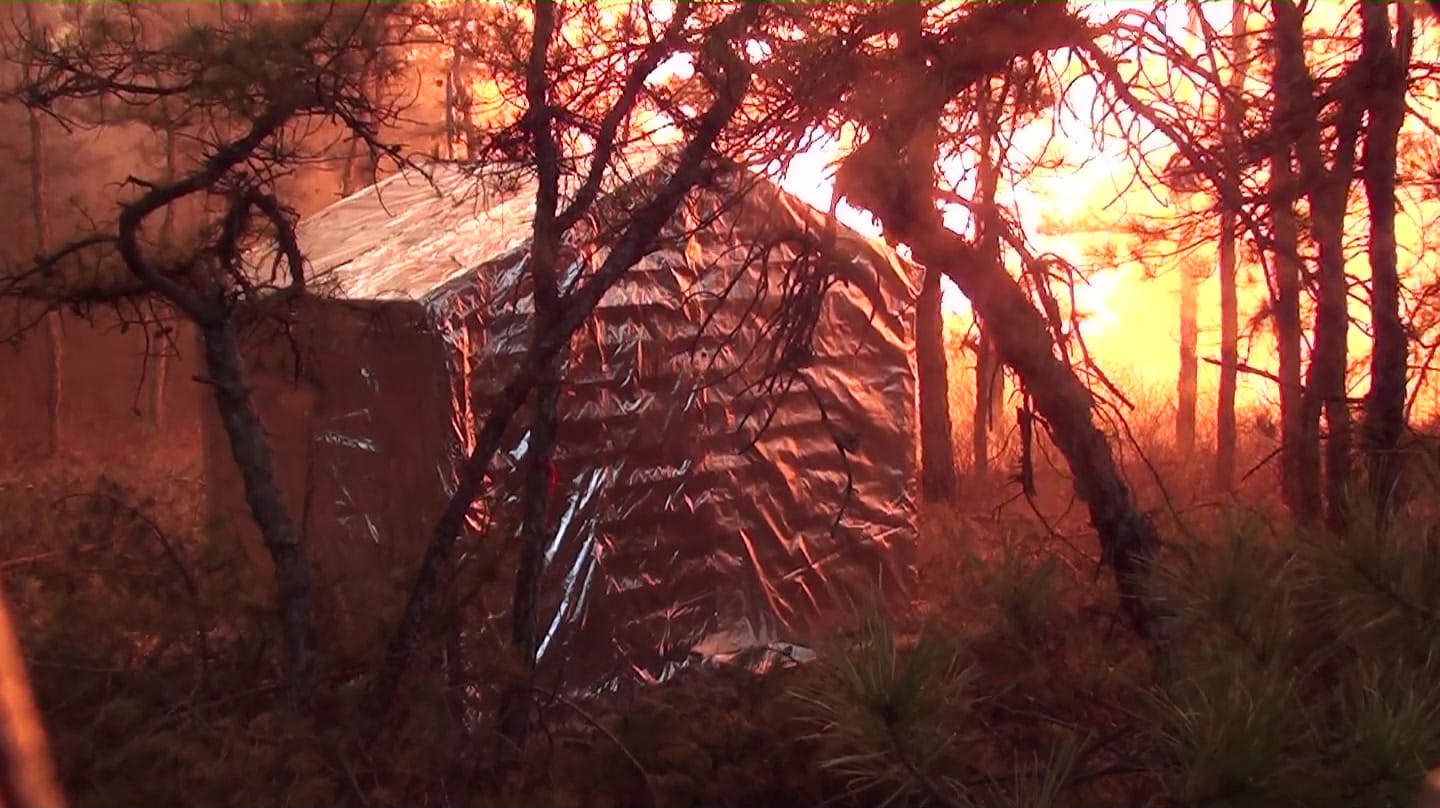
FireFoil is the layer that does not ask the building to change first. It is an aluminized wrap that goes over the structure you already own, in the condition it is already in. It turns back radiant heat, and it puts a continuous noncombustible surface over the places embers get in. It needs no water, no chemicals and no electricity, and once it is on it does not need anyone standing next to it, which matters on a day when an evacuation has already removed the people.
That is why it belongs in the plan for the back half of a season specifically. The slow layers use the years you have. This is the one that can use the weekend you have.
It is also the layer that fails on logistics rather than on physics. You cannot wrap a building you have not measured, with material you have not ordered, on a timeline you have never tested. Those are decisions, and they are all available to you today.
Five decisions worth making now
1. Measure the building. Footprint and number of stories. That is the whole input. Ten minutes with a tape or a satellite view gets you a number you can order against, and it is the one piece of information you cannot gather while you are packing.
2. Choose your coverage before you are choosing under pressure. Base perimeter coverage and a full wrap answer different parts of the same problem, and the right answer depends on your building. We wrote about how the two jobs of structure wrap actually work and why coverage is a dial rather than a default. Read it once now, decide once, and be done with the question.
3. Buy on a shipping timeline, not a fire timeline. Our team works to get orders placed before 2pm Pacific out the same day, and the rest out the following day. From there it is the carrier and the shipping speed you chose at checkout, which is the part nobody thinks about until the wind is already up. Every season the same thing happens: demand arrives in one week, for everybody, at once. Ordering in September is a different experience from ordering during a red flag warning.
4. Decide who puts it on, and prove the time yourself. Not an estimate from us. Open the packaging on a Saturday, put a panel on one wall, and time it. You will learn more in that hour than from any spec sheet, and you will find out which corners and openings on your building are awkward while the stakes are zero.
5. Decide your trigger, and put it earlier than the order. An evacuation warning, a named fire within a set distance, a wind forecast above a number you pick. Write it down. The point of a written trigger is that it does not require judgment on the day, when judgment is the scarcest thing you have.
What does not change
None of this replaces the rest of the work. FireFoil is one layer, and the other three are free tools from our parent company, AACI Group. Each takes about five minutes and none of them asks you to create an account.
- Home Hardening Score scores the building itself: roof, vents, eaves, siding, windows and the first five feet, and tells you which gaps matter most.
-
- Defensible Space Score scores the ground around it, zone by zone out to a hundred feet.
-
- Wildfire Action Plan is the plan for the day a fire actually moves toward you: what you take, who you call, and which way you drive.
Run those three and the wrap stops being a purchase and starts being one layer in something you can describe.
And the safety line does not move. FireFoil is not a survival shelter. Nobody should be inside a wrapped structure, and nobody should wrap themselves, another person, or animals. When the order comes, you leave.
Where to go from here
The thing that separates a household that has options from one that does not is rarely money and it is rarely knowledge. It is a decision that got made in September instead of in November.
Size your building either way and compare what base coverage and a full wrap each cost and how much seam each one creates. FireShields, our distributor for property owners, will do the math from a footprint and a story count.
Size your coverage at fireshields.com/buy
If you want a second read on your own exposure before you decide, reach out. We will walk the building with you, work out where the coverage has to be continuous and where a band is enough, and build a personalized protection plan around it.
Commercial property, or interested in carrying FireFoil? Call (855) 918-3473, email info@firefoil.com, or get in touch here.