A wildfire is not a typical house fire. It brings a relentless combination of intense radiant heat and a shower of burning embers that can overwhelm a structure in minutes. To truly understand what it takes to defend your property, we need to look at the science of fire resistance. The ASTM E119 fire test provides the critical baseline, showing us how materials perform under extreme stress. Understanding this standard helps reveal the critical difference between a flimsy fire blanket and an engineered fire shield designed for real-world wildfire protection.
Key Takeaways
- Understand the standard for true fire resistance: The ASTM E119 test is the official measure of how well a building system contains fire, blocks heat, and maintains its structure—the three pillars of effective fire safety.
- Look beyond the lab rating for wildfire safety: An hourly fire rating is based on a controlled furnace test, which doesn’t account for the unique threats of a wildfire, like intense radiant heat and flying embers.
- Choose a fire shield, not a fire blanket, for home protection: Fire blankets are ineffective for structural defense and will fail in a wildfire. A professional fire shield is engineered to reflect radiant heat and block embers, applying fire-resistance principles to real-world wildfire conditions.
What Exactly is the ASTM E119 Fire Test?
When you hear experts talk about fire safety in buildings, the term “ASTM E119” almost always comes up. It’s a critical standard, but the technical name can sound a little intimidating. At its core, this test is all about understanding how building components perform when exposed to intense heat and flames. It provides the data that informs building codes, helping ensure that structures are designed to give people time to escape and to prevent a fire from spreading uncontrollably. Let’s break down what this test is, why it matters for building safety, and how it compares to other fire tests.
Why It’s a Big Deal for Building Safety
Think of ASTM E119 as the gold standard for testing how well building materials and structures hold up against fire. The ASTM E119 test is a method for evaluating how long a building component—like a wall, floor, or roof—can resist a fire while still doing its job. The main goals are to see if it can contain the fire in one area and maintain its structural integrity, meaning it won’t collapse under pressure. This test isn’t just for one type of material; it applies to everything from concrete columns to wooden partitions, giving us a reliable way to measure fire resistance across the board.
ASTM E119: How It Stacks Up Against Other Tests
While ASTM E119 is a big name in fire testing, it’s not the only one. You might also see it referred to as UL 263—they are essentially the same standard, just managed by different organizations. There are also international standards, like those from the ISO, which sometimes use different criteria to measure performance. The key takeaway is that ASTM E119 is the primary fire resistance test used in U.S. building codes to determine how long a structure can withstand a fire. It provides a consistent benchmark that architects, builders, and safety officials rely on to ensure buildings are designed to be as safe as possible.
A Step-by-Step Look at the ASTM E119 Test
So, what actually happens during an ASTM E119 test? It’s not as simple as just holding a flame to a wall. The process is highly controlled and standardized to make sure the results are reliable and repeatable for any building material. Think of it as a meticulously planned stress test designed to mimic the conditions of a real building fire in a lab. It boils down to three key parts: the fire itself, how long the material lasts, and how it holds up under pressure. This method ensures that when a product receives a fire rating, it’s based on consistent and demanding criteria.
Preparing for the Test
Getting a product ready for an ASTM E119 test is a detailed process that requires careful planning. It’s not just about the material itself, but about how the entire assembly performs as a system. The lab needs to see the product exactly as it would be installed in a real-world scenario to get an accurate picture of its fire resistance. This means providing a complete and correctly built sample, along with all the necessary paperwork. The goal is to eliminate any variables so the test can focus purely on the two main objectives: how well the assembly resists fire and whether it maintains its structural integrity under extreme stress. Proper preparation is the first and most critical step toward a successful and meaningful test.
Submitting Samples and Documentation
When it’s time to submit a product for testing, you can’t just send a small swatch of material. The testing facility requires a full-size sample that is assembled just as it would be on a construction site, because the test evaluates the entire system, not just one component. For example, if you’re testing a wall, you need to provide a complete section with all the studs, insulation, and finishing materials. Along with this physical sample, you must include comprehensive documentation. This means submitting all the drawings, installation instructions, and a list of every material used. This information gives the testers the full context they need to conduct the evaluation properly and verify that the system is built exactly as designed.
What is the Standard Fire Exposure Curve?
To ensure every material is tested on a level playing field, the ASTM E119 test uses a very specific fire. A sample of the material—like a wall section or a piece of a roof—is placed in a special furnace. This furnace doesn’t just blast it with heat; it follows a precise temperature-time recipe known as the standard fire exposure curve. The heat gradually increases, reaching about 1,000°F in five minutes and climbing to 1,700°F after an hour. This controlled environment is what makes the test so valuable, as it allows for a true apples-to-apples comparison of fire resistance across different products and assemblies.
How Test Duration Determines Fire Ratings
The main goal of the test is to see how long a material can hold out before it fails. The clock starts as soon as the furnace is lit. “Failure” isn’t just about the material bursting into flames. It can happen in a few ways: if the side not exposed to the fire gets too hot, if flames or hot gases manage to sneak through any cracks, or if the material collapses under its own weight. The total time the material successfully withstands the fire becomes its fire-resistance rating. These ratings are given in hours, like a “1-hour” or “2-hour” rating, telling you exactly how long the assembly can be expected to perform its job during a fire.
Putting Structural Performance to the Test
This test goes beyond just heat and flames; it also measures strength. Throughout the test, sensors are constantly tracking the temperature on the unexposed side of the material while also monitoring its structural integrity. If the material is part of a load-bearing assembly, like a floor or a supporting wall, an appropriate weight is applied to it during the fire. This is a critical step because it shows whether the material can continue to support its load and prevent a structural collapse while under attack. It’s this part of the test that helps us understand how materials will truly perform when they’re needed most in a real-world fire.
The Hose Stream Test
Simulating Real-World Firefighting Conditions
The fire exposure is just the first half of the battle. For certain building assemblies, the ASTM E119 standard includes a crucial follow-up: the hose stream test. This part of the process is designed to mimic the intense conditions of active firefighting. Immediately after being removed from the furnace, the red-hot test sample is blasted with a high-pressure stream of water. The goal is to see if the material can withstand the sudden, violent cooling—known as thermal shock—and the sheer force of the water without cracking, breaking apart, or allowing water to pass through. This step is vital because it shows whether a material can maintain its structural integrity under the combined stress of extreme heat and a sudden firefighting response, ensuring it doesn’t just resist fire but also holds up when help arrives.
The 3 Criteria for Passing the ASTM E119 Test
Passing the ASTM E119 test is a rigorous process that goes far beyond simply resisting flames. A material or building assembly is pushed to its limits to prove it can perform its job during a fire, protecting what’s on the other side. To earn a fire-resistance rating, a test specimen must meet three critical performance benchmarks simultaneously: it has to insulate from extreme heat, hold its shape under pressure, and completely contain the fire. It’s an all-or-nothing evaluation, and failure in any one of these areas means the entire test is a failure.
Pass/Fail Factor 1: Keeping the ‘Cool’ Side Cool
Imagine a wall is being tested. While one side faces the furnace’s intense heat, the other side—the one that would be inside a room—has to stay relatively cool. According to the Fire Tests of Building Construction and Materials, the temperature on this unexposed side cannot rise more than an average of 250°F (139°C) above the starting temperature. This is a critical requirement because it ensures a material can effectively block heat transfer. If the unexposed side gets too hot, it could easily ignite furniture, curtains, or other items inside the room, allowing the fire to spread even if the wall itself never burns through.
Temperature Rise Limits
This limit is about more than just numbers; it’s a fundamental measure of insulation. A material can stop flames but still fail if it lets too much heat pass through, because radiant heat alone can ignite objects on the “safe” side of a barrier. The 250°F average limit, along with a rule that no single point can exceed 325°F above the starting temperature, ensures the material is truly insulating. This is one of the key performance benchmarks for earning a fire-resistance rating. It confirms that the assembly isn’t just containing the fire but is also preventing the heat from creating a new fire hazard in an adjacent space, which is crucial for effective containment.
Cotton Waste Ignition Test
To make the heat transfer rule even more tangible, the test includes a simple but effective check. During the evaluation, a pad of dry cotton is held against the unexposed surface for 30 seconds at various intervals. If the cotton pad smolders or ignites at any point, the assembly immediately fails the test. This provides a clear, real-world demonstration of whether the surface has become hot enough to be an ignition source itself. It’s a practical way to confirm that the barrier is not only limiting the temperature rise but is also preventing the kind of concentrated heat that could easily set nearby combustibles alight.
Pass/Fail Factor 2: Holding Strong Under Pressure
A fire-resistant wall or floor isn’t much good if it collapses. During the ASTM E119 test, assemblies like walls, floors, and beams are subjected to loads that simulate the real-world weight they would carry in a building. The test specimen must support this load for the entire duration of the fire exposure without collapsing. This part of the test proves the material’s structural stability under the extreme stress of a fire. Meeting these Standard Test Methods ensures that a building can maintain its structural integrity during a fire, allowing occupants time to evacuate safely and giving firefighters a more stable structure to work in.
Structural Steel Temperature Limits
When it comes to materials like steel, the concern isn’t whether it will burn, but whether it will hold its strength. During a fire, structural steel can reach temperatures exceeding 1,100°F (593°C). At this point, steel loses a significant portion of its load-bearing capacity, making it vulnerable to bending and collapsing. This is why the ASTM E119 test is so demanding for load-bearing assemblies. It’s not enough for a steel beam to simply survive the flames; it must continue to support its designated weight throughout the fire exposure. Protecting these critical components from reaching such high temperatures is fundamental to preventing a catastrophic structural failure and ensuring the building remains standing.
Pass/Fail Factor 3: Preventing Flame Spread
Containment is the third pillar of the test. It’s not enough for a wall to stay standing and cool; it must also act as an impenetrable barrier. Throughout the test, no flames or hot gases can pass through the assembly to the unexposed side. Even small cracks or openings can lead to a failure. To make things even tougher, certain assemblies must also pass a hose stream test immediately after the fire exposure. This test blasts the hot assembly with water from a fire hose, simulating the thermal shock and impact it would face during firefighting efforts. The assembly must remain intact, proving it can fully contain a fire according to the ASTM E119 Fire Test Standards.
What the ASTM E119 Test Doesn’t Cover
While the ASTM E119 test is the benchmark for fire resistance, it’s important to know what it *doesn’t* tell us. The test is conducted in a highly controlled lab setting, which can’t fully replicate the chaotic and complex nature of a real-world fire, especially a wildfire. It focuses on how a complete assembly contains a fire from one side to the other, but it overlooks some of the most common ways structures are compromised. Understanding these gaps is key to creating a truly comprehensive fire defense plan for your property, as it highlights vulnerabilities that standard building codes might not fully address.
Surface Flame Spread (ASTM E84)
One of the biggest things the ASTM E119 test misses is how quickly flames can travel across the surface of a material. It’s designed to measure heat transfer *through* an assembly, not fire movement *on* it. For that, a different standard, ASTM E84, is used to evaluate the surface burning characteristics of materials. This is a critical factor in a wildfire, where a flurry of embers can land on your home’s siding or roof. If that material has a high flame spread rating, it can act like a wick, carrying fire across the entire structure in minutes, even if the wall itself has a good hourly fire-resistance rating.
Performance of Joints
A building is more than just walls and a roof; it’s a system of interconnected parts. The ASTM E119 test typically evaluates a solid, uninterrupted section of a wall or floor, but it doesn’t always account for the seams and joints where different components meet. These areas—where a wall meets the roof, or around windows and doors—are often the weakest links in a fire. In a real-world scenario, these joints can fail, allowing heat and embers to penetrate the structure. The performance of these connections is a critical factor that the standard test may not fully capture, leaving a potential vulnerability in a building’s fire defense system.
Common Openings and Penetrations
Think about all the necessary openings in your home’s exterior: vents for your attic and crawlspace, electrical outlets, and pipes for plumbing and utilities. These penetrations are essential for your home to function, but they are also potential entry points for fire. The E119 Standard Test Methods usually don’t include these common features unless they are specifically part of the tested design. A pristine wall section in a lab will perform very differently than a real-world wall dotted with vents and outlets. During a wildfire, wind-driven embers are experts at finding these small openings, making them a significant and often overlooked risk.
Which Building Materials Undergo This Test?
The ASTM E119 test isn’t about setting a single 2×4 or a piece of drywall on fire. Instead, it evaluates how complete building systems—or assemblies—perform when exposed to controlled fire conditions. Think of it this way: a building is a collection of parts working together, and a fire will test the weakest link. This standard is designed to find those weak points before a real fire does.
The test procedure covers the major components that form a building’s structure and separate its spaces. This includes the walls that create rooms, the floors and ceilings that divide stories, and the doors and windows that allow us to move through them. Each assembly is built in a lab exactly as it would be in a real building and then subjected to the test furnace. The goal is to see how long it can perform its job—whether that’s holding up the roof or stopping flames from spreading to the next room. This holistic approach ensures that fire ratings reflect how materials work together in the real world.
Testing Walls and Interior Partitions
When a fire starts, the walls are the first line of defense in keeping it contained. The ASTM E119 test evaluates the ability of a wall assembly to hold a fire to its location of origin. The test isn’t just on the drywall; it’s on the entire system, including the studs (wood or steel), insulation, fasteners, and finishes. The main questions the test answers are: How long can this wall prevent flames from breaking through to the other side? And how long can it block the intense heat from starting a new fire in the adjacent space? This process of containing a fire is called compartmentation, and it’s a fundamental principle of fire safety in building design.
How Floors and Roofs Are Tested
In a multi-story building, preventing a fire from spreading vertically is just as important as stopping it from spreading horizontally. The ASTM E119 test for floor and roof systems measures how long these assemblies can hold back a fire from the story below. The test also measures their structural performance. During a fire, a floor assembly must continue to support its own weight and any load on top of it without collapsing. This ensures the building remains stable, giving occupants time to evacuate safely. The test provides a rating based on how long the system can maintain its strength and integrity under intense fire exposure.
Fire Ratings for Doors, Windows, and More
A fire-rated wall is only as good as the openings within it. Doors and windows are potential weak points where fire can easily spread if they aren’t properly protected. Because of this, entire door and window assemblies—including the frame, hardware, and glass—undergo rigorous fire testing. For example, glass used in fire doors rated for one hour or more must be specifically fire-resistive and pass its own set of demanding tests. These fire test standards ensure that every component of the opening can withstand the same fire conditions as the wall it’s installed in, maintaining the integrity of the fire barrier.
What Do ASTM E119 Fire Ratings Actually Mean?
Understanding an ASTM E119 fire rating is about more than just knowing the number. It’s about what that number means for your safety and how it applies to real-world situations, especially when facing unpredictable threats like wildfires. These ratings are a critical benchmark, but they come with specific conditions and limitations that are important to grasp. Let’s break down what these hourly ratings really mean, the difference between a controlled lab test and a real fire, and some common myths that can lead to a false sense of security.
How Do Hourly Ratings Affect Building Codes?
When you see a material with a 1-hour or 2-hour fire rating, it means a sample of that material or assembly successfully withstood the ASTM E119 test conditions for that length of time. Building codes rely on these ratings to ensure structures provide a certain level of fire resistance, giving occupants time to escape and slowing the spread of fire. These Fire Tests of Building Construction and Materials are the industry standard for evaluating how walls, floors, and other components hold up against fire. However, it’s important to remember that test results show performance under specific, controlled conditions. They don’t automatically guarantee the material will perform the same way in every real-life fire.
Lab Results vs. Real-World Fires: What’s the Difference?
The ASTM E119 test is designed for consistency, using a “standard fire” that follows a precise temperature-time curve. This allows for a fair comparison between different materials and assemblies. But real fires are rarely standard. As the E119 Standard Test Methods documentation points out, actual fires are influenced by countless variables, including the type of fuel, ventilation, and the size of the space. A wildfire, for instance, introduces extreme radiant heat and a barrage of embers—conditions far different from the controlled furnace of a lab. The fire rating is an essential piece of information, but it’s just one part of a comprehensive fire protection strategy that must account for real-world variables.
Debunking Common Myths About Fire Ratings
It’s easy to assume a fire rating tells the whole story, but the ASTM E119 test is highly specific in what it measures. One of the biggest myths is that it evaluates all aspects of fire safety. According to testing labs like Intertek, this standard does not measure how much smoke or toxic gas a material produces, nor does it test how well a material stops smoke from passing through it. It also doesn’t apply to products that are installed or built differently than the tested sample. Understanding these limitations is key. A high fire rating is excellent for heat and flame resistance, but it doesn’t mean a product addresses other critical fire-related dangers like smoke inhalation.
Can This Test Predict Wildfire Protection?
While the ASTM E119 test simulates a fire inside a building, its core principles—measuring how well a material stops heat and maintains its structure—are incredibly relevant to protecting homes from wildfires. A wildfire isn’t a controlled lab experiment, but the threats it poses, like intense radiant heat and direct flame contact, are exactly what this standard helps us understand and defend against. By looking at materials through the lens of ASTM E119, we can see which ones have the strength and resilience to stand up to the extreme conditions of a wildfire, offering a reliable barrier when it matters most.
The Unique Threat of Wildfires
Wildfires are a force of nature, behaving in ways that standard building fires don’t. As one testing lab notes, “Wildfires can spread rapidly and unpredictably, making it difficult for traditional fire protection measures to be effective.” The danger isn’t just from direct flames; it’s also from the immense radiant heat that can ignite your home from a distance and the storm of burning embers that can find their way into tiny cracks and vents. This combination of threats can compromise the structural integrity of a building, leading to a total loss even if the main fire front never touches the walls. This is why specialized protection designed for these unique conditions is so critical.
Why Fire Blankets Don’t Protect Your Home
It’s important to draw a clear line between a fire blanket and a fire shield. A fire blanket is a small sheet you might use to smother a grease fire on a stovetop. It is not, and was never, designed to protect a house from a wildfire. Unfortunately, some sources mistakenly use the terms interchangeably, creating dangerous confusion. As experts point out, fire blankets “often fail to provide adequate protection for structural elements during a wildfire” because they simply can’t handle the extreme temperatures and prolonged exposure to flames. They are not a practical or effective solution for home protection and will fail under wildfire conditions.
How Fire Shields Like FireFoil Are Different
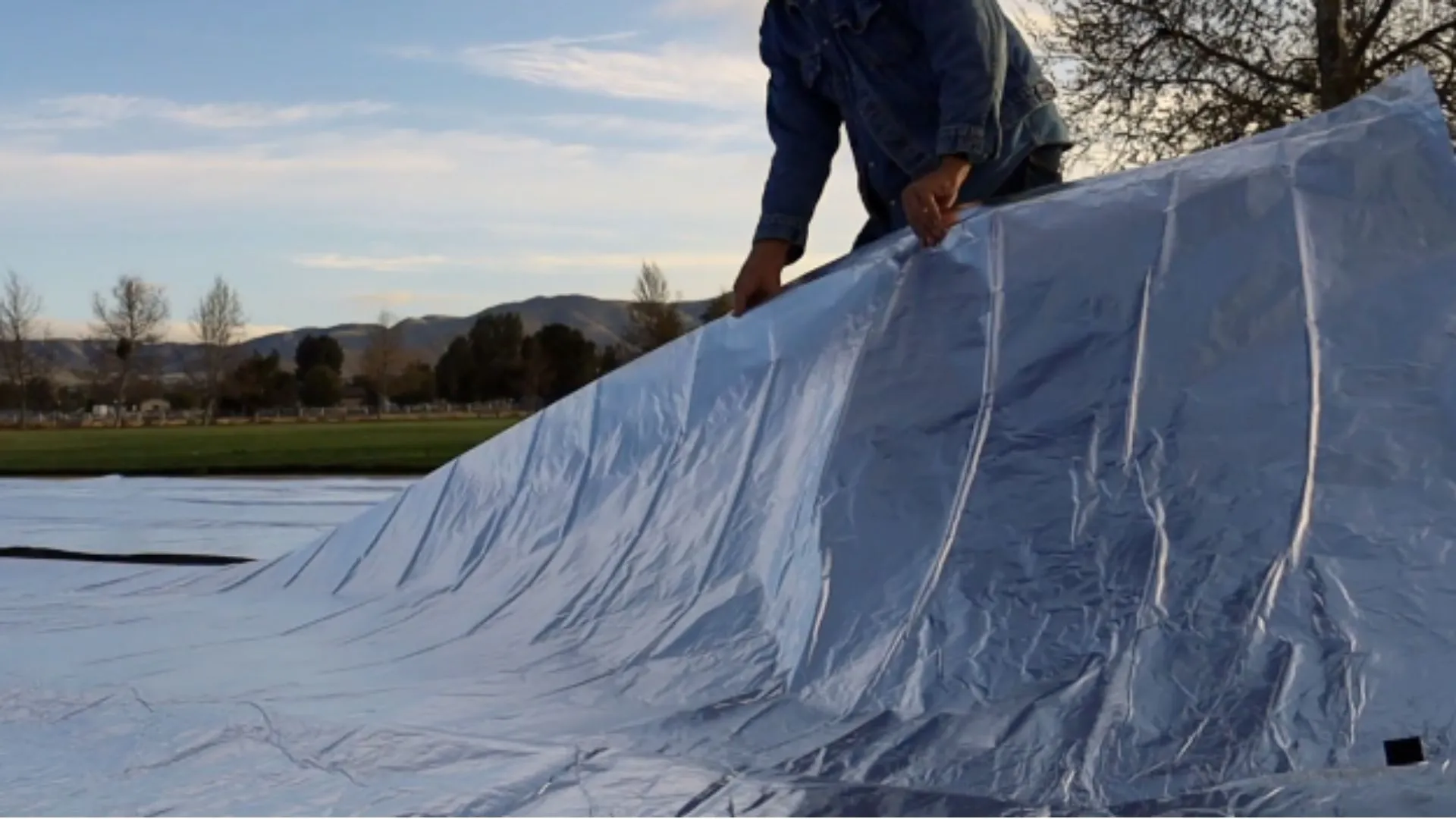
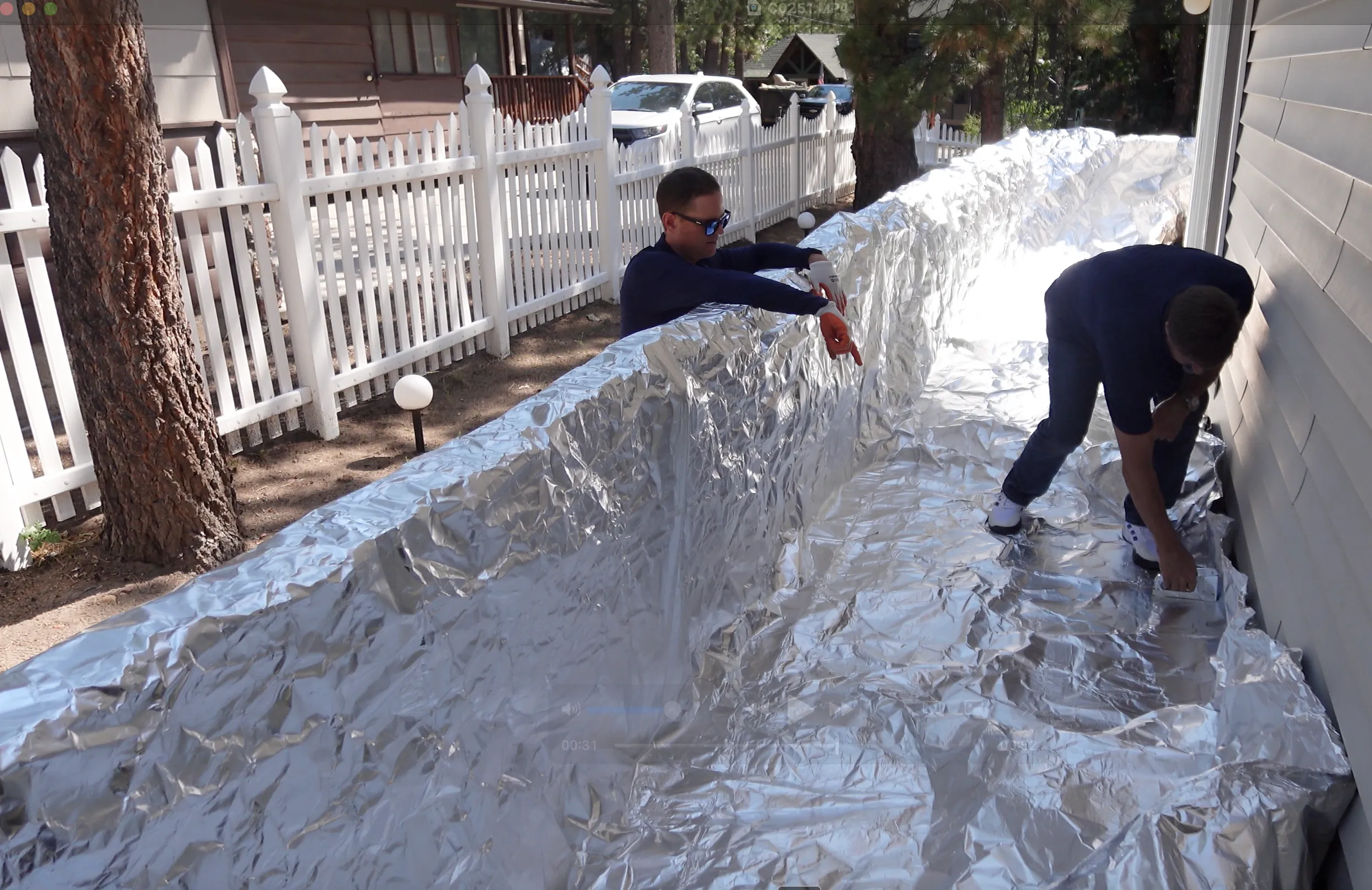
This is where professional-grade fire shields come in. Unlike flimsy fire blankets, these systems are engineered specifically to defend structures from wildfires. Fire shields that are designed with ASTM E119 principles in mind are proven to “contain fire and maintain structural integrity under high temperatures.” FireFoil’s technology, for example, is built from aluminum-based materials that reflect up to 95% of radiant heat and block burning embers. This is the kind of performance needed to keep the unexposed side of your home—the inside—cool and structurally sound. It’s why this technology has been trusted by the US Forest Service for over two decades to protect critical structures without water or chemicals.
How to Ensure Your Project is Compliant
Understanding the ASTM E119 test is one thing, but applying that knowledge is where it really counts. Achieving compliance isn’t just about choosing a product with a good fire rating; it’s about ensuring the entire system is installed correctly and meets current building regulations. Think of it as a chain—every link, from the materials you choose to the way they’re installed, must be strong for the system to hold up when exposed to fire. A single weak point can compromise the entire assembly, which is why a holistic approach to fire safety is so important.
For homeowners and property managers, this means paying close attention to detail and working with professionals who understand the standards inside and out. It also means recognizing that fire safety is an evolving field. The codes and best practices of today are built on decades of research and are constantly being updated to reflect new findings and technologies. Staying informed helps you make the best decisions to protect your property and ensure your fire protection measures perform as expected when you need them most. This section will walk you through the key aspects of compliance, from installation to building codes, so you can feel confident in your fire safety strategy.
Practical Applications in Public and Commercial Buildings
In public and commercial buildings like schools, hospitals, and offices, fire ratings are non-negotiable. They form the foundation of building codes designed to keep people safe. When a wall or floor has a “1-hour” rating, it means that assembly is designed to contain a fire and maintain its structural integrity for at least 60 minutes, providing a critical window for evacuation. But achieving that rating isn’t about a single magic material. It’s about the entire system—the studs, insulation, drywall, and fasteners—all working together. As building codes rely on these fire resistance ratings, a single weak point can compromise the entire barrier, which is why a holistic approach to design and installation is so important for public safety.
Using Coatings to Meet Fire-Rating Standards
Sometimes, a structural material needs an assist to meet the demanding requirements of the ASTM E119 test. This is where intumescent or fire-retardant coatings come into play. These specialized paints and sprays are designed to enhance a material’s fire resistance. When exposed to heat, they swell up to form a thick, insulating char layer that slows down heat transfer and protects the underlying material from flames. This can be the difference-maker that allows a steel beam or a wall assembly to withstand the furnace for the required duration and earn its hourly rating. These coatings are a practical way to ensure building components can handle high heat and meet the ASTM E-119 standards, making them a key tool in a comprehensive fire safety plan.
Why Installation Can Make or Break Compliance
A fire-rated product is only as effective as its installation. You can have the most advanced fire-resistant material in the world, but if it’s not installed according to the exact specifications of its certification, you won’t get the protection you paid for. An ASTM E119 rating applies to a complete assembly tested in a lab. As the Steel Door Institute notes, “When installing a ‘fire resistive’ assembly, you must use all the exact parts and methods listed in its certification.” You can’t swap out one component for another, even if it seems similar, unless that specific substitution is also approved. Following the manufacturer’s instructions to the letter is the only way to ensure your assembly matches the one that passed the test.
How to Stay Up-to-Date with Building Codes
Building codes are the rules that keep our structures safe, and they rely heavily on standardized testing. For fire safety, the ASTM E119 test is a cornerstone. Local building code officials, architects, and engineers use these test results to confirm that a building’s design meets legal safety requirements. These codes aren’t static; they change over time as we learn more about fire behavior and material science. For example, the International Building Code (IBC) has become progressively stricter, demanding higher levels of fire safety. Staying aware of the current codes in your area is essential for any new construction or renovation project to ensure your property is both safe and compliant.
The Benefits of Compliance
Meeting fire safety standards isn’t just about checking a box for a building inspector. It’s about creating a genuinely safer environment and protecting your investment in the long run. When a building is constructed with materials and systems that have passed rigorous tests like ASTM E119, it means every component has been proven to perform under extreme stress. This proactive approach to safety provides peace of mind, knowing that your structure has a built-in defense mechanism designed to slow the spread of fire, maintain its structural integrity, and give people valuable time to get to safety. It’s a foundational element of responsible building and property management.
Improved Insurance Rates and Legal Protection
Beyond the immediate safety benefits, compliance with fire standards can have a significant financial impact. According to industry experts, buildings that meet established fire safety standards may qualify for better insurance rates. Insurers see proven fire resistance as a reduced risk, which can translate into lower premiums for you. On the flip side, failing to meet these standards can lead to higher costs and, more seriously, increased legal liability if a fire does occur. Ensuring your property is compliant is a smart move that protects not only the structure itself but also your financial well-being.
The Certification Process
So, how does a product go from a prototype in a workshop to a certified, fire-rated building material? The journey involves a highly controlled and documented certification process centered around the ASTM E119 test. Manufacturers don’t just get a pass/fail grade; they receive a detailed analysis of their product’s performance that results in a specific fire-resistance rating. This process is what gives architects, builders, and homeowners confidence in the materials they choose. It’s a system of accountability that ensures the fire ratings you see on products are backed by scientific data and repeatable testing, not just marketing claims.
Receiving the Official Fire Resistance Rating
After a building component successfully endures the furnace and hose stream tests for a specific duration, it earns an official fire-resistance rating. This rating, typically given in hourly increments (like 1-hour or 2-hour), signifies how long the assembly can be expected to contain a fire and maintain its structural integrity under test conditions. As testing organizations like Intertek explain, the ASTM E119 test is the standard method for evaluating how long a component can resist a fire while continuing to perform its function. This rating becomes the product’s official certification, a benchmark that is recognized by building codes and used by professionals to design safe and resilient structures.
What Happens if a Product Fails?
Failure during an ASTM E119 test isn’t necessarily the end of the line for a product. In fact, it’s often a crucial part of the development process. If a test specimen fails to meet any of the three core criteria—insulation, integrity, or stability—it simply won’t receive the desired fire-resistance rating. According to testing services, manufacturers can then use the detailed test data to identify the weak points in their design. This allows them to make specific improvements, whether it’s changing a material, adjusting the thickness, or reinforcing a connection, before submitting the revised assembly for re-testing. This iterative process of testing and refinement is what drives innovation in fire-safe materials.
Accessing the Official ASTM E119 Standard
For those who want to get into the technical weeds, the full ASTM E119 standard document is the ultimate resource. It contains all the precise details of the test, from the furnace specifications and the temperature-time curve to the exact procedures for measuring performance. This document is the blueprint that testing labs follow to the letter. While it’s a dense, technical read intended for engineers and industry professionals, having access to it can be invaluable for understanding the nuances of fire testing. It’s the source code for fire resistance, and knowing how to find it is key for anyone deeply involved in building design or material specification.
Purchasing the Current Standard
The official ASTM E119 standard is a copyrighted document and isn’t available for free. To get the most current and complete version, you’ll need to purchase it directly from a standards organization. As publications like IPP Magazine note, the latest version is typically available for purchase from standards distributors online. This ensures you are working with the most up-to-date requirements and procedures, which is critical since these standards are periodically reviewed and revised. For any official project or specification, using the current version is essential for ensuring compliance and accuracy.
Finding Older Versions of the Document
While the current standard is necessary for new projects, older versions of the ASTM E119 document can be useful for research, historical context, or understanding the requirements that were in place when an older building was constructed. These historical documents show how our understanding of fire safety has evolved over time. While they aren’t typically sold by official distributors, you may be able to find them through university libraries, engineering archives, or specialized document services. They provide a fascinating look at the history of fire testing and the continuous effort to make our buildings safer based on decades of research and real-world experience.
Related Articles
- How to Choose Temporary Fire Resistant Window Coverings
- How Fire Shelter Wrap for Buildings Works
- What Is a Fire Shield for Wildfire Defense?
- Large Fire Retardant Blanket vs. A Fire Shield
- The Ultimate Fire Shield Guide for Home Protection
Frequently Asked Questions
What does a “1-hour fire rating” actually mean in simple terms? A 1-hour fire rating means that a complete building assembly, like a specific wall or floor system, successfully withstood the controlled fire conditions of the ASTM E119 test for at least 60 minutes. During that time, it effectively blocked the fire from passing through, prevented the unexposed side from getting dangerously hot, and maintained its structural strength without collapsing. It’s a standardized benchmark of performance under very specific lab conditions.
If a material has a fire rating, does that mean it’s automatically safe for my home? Not necessarily. A fire rating applies to an entire system or assembly that was built and tested in a lab, not just a single product. For that rating to be valid in your home, the entire assembly must be constructed using the exact same materials and methods as the tested version. Swapping out one type of screw or using a different brand of insulation can compromise the system’s performance. Proper installation is just as critical as the materials themselves.
How does a controlled lab test relate to an unpredictable wildfire? While no lab test can perfectly replicate a wildfire, the ASTM E119 standard provides an essential baseline for performance. It measures a material’s ability to resist intense heat and maintain its structural integrity, which are two of the biggest threats a wildfire poses to a home. This data helps us understand which materials have the resilience to stand up to extreme conditions, even if those conditions vary from the test’s precise formula.
Why can’t I just wrap my house in a fire blanket for wildfire protection? This is a common and dangerous point of confusion. A fire blanket is a small item designed to smother a minor kitchen fire and is completely ineffective for protecting a structure. It cannot withstand the prolonged, intense radiant heat and ember attacks from a wildfire. In contrast, a professional fire shield, like FireFoil, is an engineered system specifically designed to reflect radiant heat and block embers, providing a proven barrier that keeps your home intact.
Does the ASTM E119 test account for dangers like smoke? No, it does not. The test is strictly focused on three things: containing flames, blocking heat transfer, and maintaining structural stability. It does not measure how much smoke a material produces when it burns or how well an assembly stops smoke from passing through it. While a fire rating is a critical piece of a building’s safety plan, it doesn’t cover every potential hazard in a fire.